
- Prep: 20 Minutes
- Cook: 45 Minutes
- Total: 65 Minutes
- Servings: 10 servings
A Quick Note Before You Start
Day-old bread is your secret weapon here — fresh bread turns to mush. Give yourself a head start and cube your bread the night before so it dries out properly. That single step makes all the difference.
Thanksgiving stuffing is the dish everyone argues over at the table — and this recipe settles the debate. Buttery sourdough, fresh herbs, sweet onions, and just enough broth to make it custardy inside with a golden, crackling crust on top.
We tested this against a dozen classic versions and landed on a combination of techniques that gives you maximum flavor without any guesswork. It comes together in about an hour and can be fully prepped the day before — a total lifesaver on Thanksgiving morning.
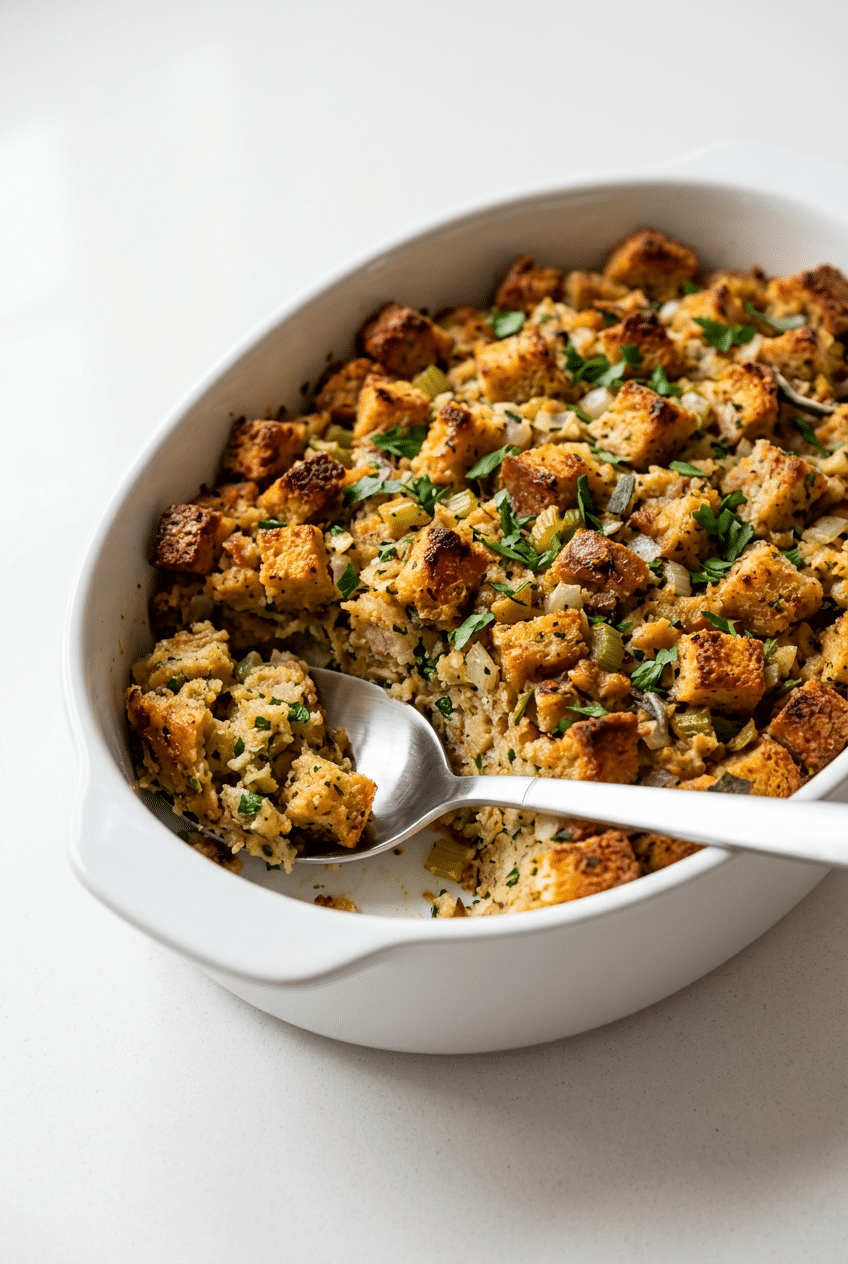
Ingredients for Thanksgiving Stuffing
The Bread Base
- 1 large sourdough loaf (about 1.5 lbs), cubed into 3/4-inch pieces — sourdough’s slight tang and sturdy crumb holds up beautifully without turning to paste
- 6 tablespoons unsalted butter, plus more for the pan — real butter is non-negotiable here; it’s the backbone of the flavor
The Aromatics
- 1 large yellow onion, diced — yellow onions get sweeter as they cook and build the savory foundation
- 4 stalks celery, diced (about 1.5 cups) — classic stuffing needs that slight crunch and herbal celery note
- 4 cloves garlic, minced — just enough to add depth without overpowering
The Herbs & Seasoning
- 2 tablespoons fresh thyme leaves (or 2 tsp dried) — fresh thyme is miles better here; it perfumes the whole dish
- 1 tablespoon fresh sage, finely chopped (or 1 tsp dried) — sage is THE classic stuffing herb; don’t skip it
- 2 tablespoons fresh flat-leaf parsley, chopped — brightens everything up and adds a fresh pop of color
- 1 teaspoon Bell’s Seasoning — Bell’s Seasoning is the classic New England poultry blend that takes stuffing from good to legendary; one small box lasts years
- 1 teaspoon kosher salt
- 1/2 teaspoon freshly ground black pepper
The Wet Ingredients
- 2.5 to 3 cups good-quality chicken or turkey broth — use low-sodium so you control the salt; Swanson Low-Sodium Chicken Broth is our go-to for consistent, clean flavor
- 2 large eggs, beaten — eggs bind everything together so it slices cleanly rather than crumbling apart
Optional Add-Ins
- 1/2 cup dried cranberries (for a sweet-savory twist)
- 1/2 cup toasted pecans or walnuts
- 1 cup cooked and crumbled Italian sausage
- 1/2 cup diced apple (Granny Smith works great)
- 2 tablespoons fresh rosemary, minced
How to Make Thanksgiving Stuffing Step by Step
Step 1: Dry Out the Bread
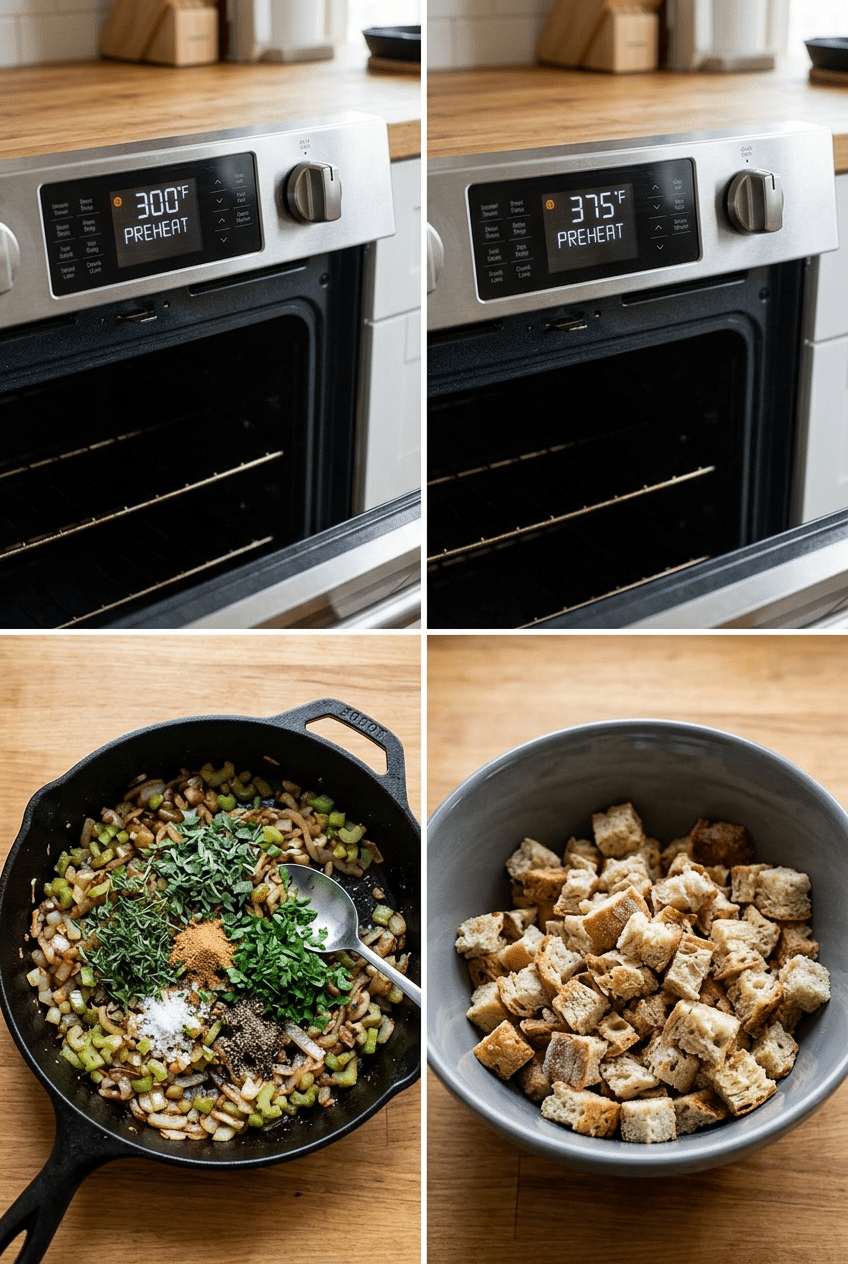
Preheat your oven to 300°F. Spread your cubed sourdough in a single layer across two large baking sheets and bake for 20 to 25 minutes, tossing once halfway through, until the cubes are completely dry and feel light when you pick them up. You want them stale and firm, not toasted — pale gold at most.
Dry bread is the foundation of great stuffing. Wet or fresh bread absorbs the butter and broth too quickly and turns into a dense, gummy brick instead of that pillowy-yet-crispy texture we’re after. If you did this the night before, skip this step and move straight on.
Step 2: Cook the Aromatics
Raise the oven temperature to 375°F. In a large skillet over medium heat, melt all 6 tablespoons of butter. Add the diced onion and celery and cook, stirring occasionally, for about 10 minutes until the onion is soft, translucent, and just starting to turn golden at the edges. Add the minced garlic and cook for one more minute until fragrant.
Don’t rush this step. Properly softened onions and celery release their natural sugars and create a sweet, savory base that perfumes every single bread cube. Rushing and leaving them crunchy means your stuffing will have raw-tasting pockets of vegetable in the final dish.
Step 3: Add the Herbs
Remove the skillet from the heat and stir in the thyme, sage, parsley, Bell’s Seasoning, salt, and pepper. Stir everything together so the herbs bloom in the residual heat and butter. The smell at this point should be absolutely incredible — deeply savory and herby.
Cooking the herbs in butter (even off-heat) rather than just tossing them in dry extracts their fat-soluble flavor compounds. You get a much more rounded, intense herb flavor throughout the whole dish rather than sparse little flecks of dried herb flavor.
👉 Bell’s Seasoning (classic poultry blend) — The original New England stuffing seasoning — one box transforms your stuffing from homemade to heirloom.
Step 4: Combine Everything
Dump your dried bread cubes into the largest bowl you own. Pour the entire buttery onion-herb mixture over the top and toss to coat every cube. In a separate bowl or large measuring cup, whisk together 2.5 cups of broth and the two beaten eggs, then pour that over the bread mixture. Toss gently but thoroughly — you want every cube moistened.
Check the texture by squeezing a small handful: it should feel like wet sand that just barely holds together. If it still feels dry and the bread isn’t absorbing the liquid, add the remaining half cup of broth a little at a time. Different bread types absorb differently, so trust your hands more than the exact measurement.
👉 Swanson Low-Sodium Chicken Broth (pack of 6) — Low-sodium broth lets you control the salt — Swanson’s is clean, consistent, and perfect for stuffing.
Step 5: Bake to Golden Perfection
Butter a 9×13-inch baking dish generously. Transfer the stuffing mixture into the dish and spread it into an even layer, then press down very lightly so it’s compact but not packed. Cover tightly with aluminum foil and bake at 375°F for 30 minutes. Then remove the foil and bake for another 15 to 20 minutes uncovered until the top is deeply golden and the edges are crisped and caramelized.
The covered phase steams the interior so it stays moist and custard-like in the center. The uncovered phase creates that iconic golden crust that everyone fights over. If you want extra crunch, dot a tablespoon of butter over the top right before you pull the foil off — it bastes the surface as it bakes.
👉 Large Ceramic 9×13 Baking Dish with Lid — A lidded ceramic baker means no foil wrestling — and it goes straight from oven to table beautifully.
Step 6: Rest and Serve
Pull the stuffing from the oven and let it rest uncovered for 10 minutes before serving. It will firm up slightly as it cools and become much easier to scoop into clean, generous portions. Garnish with a few extra fresh thyme sprigs and a tiny sprinkle of flaky salt if you have it.
That 10-minute rest matters — it lets the egg binder set fully so the stuffing holds its shape on the plate instead of collapsing into a pile. Serve it right out of the baking dish at the table for the most impressive presentation.
Nutrition Information
- Per serving (1/10th of recipe): 285 cal
- 11g fat
- 38g carbs
- 9g protein
Pro Tips
Dry the bread the night before: Spread cubed bread on a baking sheet and leave it uncovered on the counter overnight. This is faster than oven-drying and creates an even, consistent dryness that absorbs the broth perfectly without becoming soggy or overly toasted.
Use a mix of two breads: Combine sourdough with a plain white sandwich loaf (half and half) for a stuffing that has both the structural integrity of sourdough AND the soft, pillowy bite of white bread. The contrast in texture makes every forkful more interesting.
Don’t skip the egg: The two beaten eggs are the binding agents that turn a pile of wet bread into something that holds together and slices. Skipping them gives you a delicious but loose, crumbly stuffing that’s harder to serve and plate cleanly.
Taste the mixture BEFORE it bakes: Once you’ve combined everything in the bowl, taste a small pinch of the raw mixture for seasoning. It sounds odd, but the egg and broth are already cooked ingredients — this is your last chance to add salt before it all goes in the oven.
Save turkey drippings for the top: If you’re roasting a turkey at the same time, spoon a few tablespoons of pan drippings over the stuffing right when you remove the foil. It bastes the surface with turkey-flavored fat and the top will caramelize into something truly extraordinary.
Delicious Variations
Sausage and Apple Stuffing
Brown half a pound of mild Italian sausage in the skillet before you cook the aromatics, breaking it into small crumbles. Remove and set aside, cook the onion and celery in the same pan, then fold the sausage back in with a diced Granny Smith apple when you combine everything. The sausage adds richness and the apple cuts through with bright sweetness. This is the variation that converts everyone who claims they don’t like stuffing.
Mushroom and Herb Stuffing (Vegetarian)
Swap the chicken broth for a rich mushroom or vegetable broth and add two cups of sliced cremini mushrooms to the skillet with the onions. Cook until the mushrooms release all their liquid and shrink down significantly — this is crucial, or they’ll make the stuffing watery. The mushrooms add a deep, meaty umami that vegetarians and meat-eaters both love. Use olive oil in place of two tablespoons of butter to keep it fully plant-based.
Cornbread Stuffing
Substitute half the sourdough with day-old crumbled cornbread for a Southern-style dressing with a slightly sweet, tender crumb. Cornbread is more delicate than sourdough, so handle it gently when tossing and reduce the broth by about a quarter cup since cornbread absorbs faster. Add a diced jalapeño with the onions for a subtle heat that works brilliantly against the sweetness of the corn. This version is especially stunning served alongside smoked turkey or ham.
Chestnut and Pancetta Stuffing
Dice four ounces of pancetta and render it in the skillet before the butter goes in, then cook the aromatics in the rendered fat. Fold in one cup of jarred roasted chestnuts, roughly chopped, when you combine everything. Chestnuts have a mild sweetness and creamy texture that makes this stuffing feel genuinely luxurious. It pairs beautifully with a simple roast chicken any time of year — not just Thanksgiving.
Storage Instructions
Refrigerator
Let the stuffing cool completely to room temperature before covering the baking dish tightly with plastic wrap or transferring to an airtight container. It will keep in the refrigerator for up to 4 days. To reheat, add a splash of chicken broth over the top, cover with foil, and warm in a 325°F oven for 20 to 25 minutes until heated through. The broth splash is critical — it re-steams the interior and prevents it from drying out into a brick.
Freezer
Stuffing freezes surprisingly well for up to 3 months. Portion it into individual servings in freezer-safe zip-lock bags or rigid containers before freezing — this way you can pull out exactly what you need without thawing the entire batch. Thaw overnight in the refrigerator, then reheat covered with foil in a 350°F oven for 25 to 30 minutes. Adding a tablespoon of broth per serving before reheating brings it back to life beautifully.
Make-Ahead
This stuffing is genuinely make-ahead friendly, which is its greatest Thanksgiving superpower. You can assemble the entire dish — bread, aromatics, broth, eggs — up to 24 hours in advance. Cover the unbaked dish tightly with plastic wrap and refrigerate. When you’re ready to bake, pull it from the fridge 30 minutes before it goes in the oven to take the chill off, then bake as directed. The resting time in the fridge actually helps the bread absorb everything more evenly and the final result is arguably better than baking it fresh.
For food safety guidelines, visit USDA Food Safety Guidelines for Holiday Cooking.
Frequently Asked Questions
What’s the difference between stuffing and dressing?
Technically, stuffing is cooked inside the bird and dressing is baked in a separate pan in the oven. From a flavor standpoint, stuffing cooked inside the turkey absorbs those incredible drippings and becomes more deeply savory — but it can be tricky to get it to a safe internal temperature without overcooking the turkey. This recipe is designed as a dressing (cooked separately), which gives you more control, a better crust, and easier timing on a busy holiday.
Can I use store-bought stuffing bread instead of sourdough?
Absolutely. Most grocery stores sell pre-cubed stuffing bread this time of year and it works great. Pepperidge Farm Herb Seasoned Stuffing cubes are a solid shortcut — just skip the Bell’s Seasoning in the recipe since the cubes are already seasoned, or use it very sparingly. The main advantage of making your own cubes from sourdough is controlling the texture and salt level from the start.
How do I know when the stuffing is done?
The top should be a deep, rich golden-brown — not just pale gold, but genuinely caramelized. The edges of the baking dish should show some crispy, almost lacy bits. Insert an instant-read thermometer into the center: you’re looking for 160°F. If the top is browning too fast before the center reaches temperature, tent it loosely with foil for the last few minutes to slow the browning while the interior finishes cooking.
My stuffing turned out too dry. What went wrong?
Two likely culprits: either the bread was over-dried before baking, or you didn’t use quite enough broth. Different breads absorb liquid at very different rates — sourdough tends to absorb more slowly than white bread. Going forward, always check the squeeze test before baking: grab a small handful and squeeze gently. It should barely hold together like wet sand. If it crumbles apart, add more broth, a quarter cup at a time, before it goes in the oven.
Can I make Thanksgiving stuffing without eggs?
Yes, though the texture will be slightly more rustic and crumbly. The eggs act as a binder that helps the stuffing hold its shape when you scoop it. For an egg-free version, reduce the broth by about a quarter cup (since you’re removing the liquid from two eggs) and consider adding two tablespoons of ground flaxseed mixed with six tablespoons of water as a binder. Let the flax mixture sit for five minutes before adding it. The result is still delicious, just a bit looser.
How much stuffing does this recipe make?
This recipe makes enough to generously feed 10 people as a side dish, which is appropriate for a standard Thanksgiving table. If you’re feeding a larger crowd (14 or more), simply scale the recipe up by 50% and use two 9×13 baking dishes rather than cramming it all into one. Overfilling a single dish prevents the heat from circulating properly and you’ll end up with a mushy center and under-crisped top. Two dishes also means two gorgeous crispy-topped servings.
More Recipes You Will Love
👉 Spooky Skeleton Charcuterie Board Recipe
👉 Best Pumpkin Shaped Cheese Ball Recipe
👉 Perfect Caramel Apples Recipe
👉 Best Halloween Punch Recipe (Scary Good)
This Thanksgiving stuffing recipe is the one you’ll make on repeat — not just every November, but any time you roast a chicken or want something special on the table. Make it once and it becomes yours. Leave a comment below and tell me which variation you tried, and if you made it for Thanksgiving, I want to hear how it went. Share the recipe with someone who needs a reliable stuffing they can count on.