
- Prep: 15 Minutes
- Cook: 22 Minutes
- Total: 37 Minutes
- Servings: 12 muffins
A Quick Note Before You Start
Use room-temperature eggs and buttermilk — this makes a real difference in how light and tender your muffins turn out. Don’t skip the high-heat start; that’s the secret to getting those beautiful domed tops you see at the bakery.
Blueberry muffins are one of those things that sound simple but can go sideways fast — dense crumb, flat tops, berries that sink to the bottom. This recipe fixes all of that with a few smart techniques that actually work.
We’re talking bakery-style domed tops, a crackly cinnamon-sugar crust, and blueberries suspended perfectly through every bite. Once you nail this method, you’ll never reach for a boxed mix again.
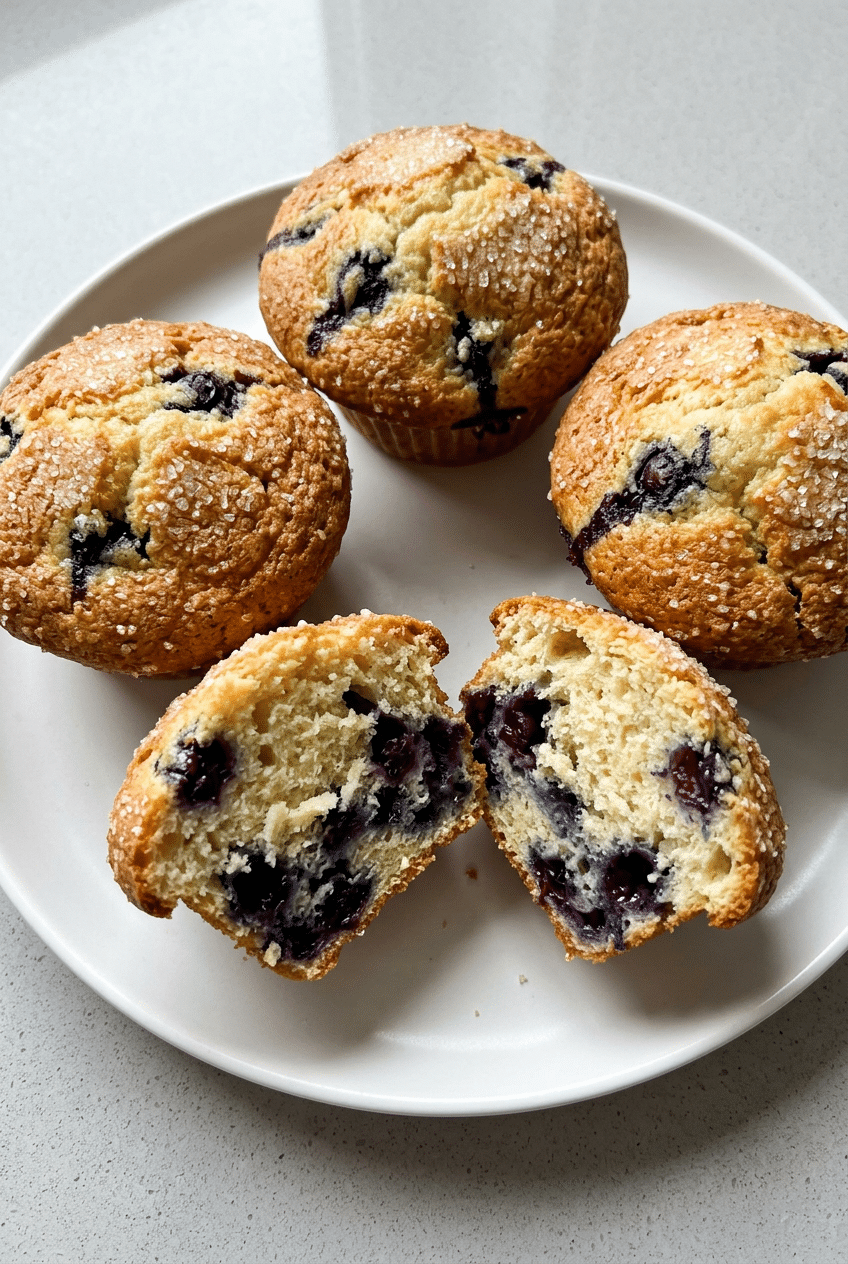
Ingredients for Blueberry Muffins
For the Muffin Batter
- 2 cups (250g) all-purpose flour — the backbone of the muffin; spoon and level it, don’t scoop
- 2 teaspoons baking powder — gives you lift for that domed top
- 1/2 teaspoon baking soda — reacts with the buttermilk for extra tenderness
- 1/2 teaspoon fine sea salt — balances the sweetness
- 1/2 teaspoon ground cinnamon — adds warm depth without being obvious
- 3/4 cup (150g) granulated sugar — sweetens the batter without making it cloying
- 2 large eggs, room temperature — room-temp eggs incorporate more evenly into the batter
- 1/2 cup (115g) unsalted butter, melted and slightly cooled — butter gives richness; oil gives moisture, but butter wins on flavor here
- 1 cup (240ml) buttermilk, room temperature — the acidity tenderizes the crumb and activates the baking soda
- 2 teaspoons pure vanilla extract — use the real stuff; it matters
- 1 1/2 cups (220g) fresh or frozen blueberries — fresh is ideal, but frozen works great right from the freezer (don’t thaw them)
For the Sugar Crust Topping
- 3 tablespoons coarse raw sugar (turbinado) — creates that signature crackly, sparkly top
- 1/4 teaspoon ground cinnamon — a little extra warmth in the topping ties everything together
Optional Add-Ins
- 1 teaspoon lemon zest (stirred into the batter — brightens the blueberry flavor beautifully)
- 1/2 cup cream cheese cubes (tucked into the center of each muffin before baking)
- 1/4 teaspoon almond extract (in addition to vanilla — subtle and gorgeous with blueberries)
- 1/2 cup white chocolate chips
- Streusel topping instead of sugar crust
How to Make Blueberry Muffins Step by Step
Step 1: Prep Your Pan and Oven
Preheat your oven to 425°F (220°C) and line a standard 12-cup muffin tin with paper liners or grease each cup well with butter or nonstick spray. The high starting temperature is not a typo — this blast of heat causes the batter to rise rapidly in the first few minutes, which is exactly how you get those beautiful domed tops instead of flat ones.
Get your liners in before you start mixing so you’re not scrambling later. If you’re using silicone muffin liners, lightly grease them anyway — blueberries have a way of sticking right where they touch the sides.
👉 Silicone Muffin Liners (Set of 12, Non-Stick Reusable) — Reusable silicone liners release muffins cleanly every time — no more stuck bottoms or torn papers.
Step 2: Mix the Dry Ingredients
In a large bowl, whisk together the flour, baking powder, baking soda, salt, cinnamon, and sugar until everything is evenly distributed. Whisking the dry ingredients together for a full 30 seconds does the same job as sifting — it breaks up any flour clumps and distributes the leavening evenly so no muffin ends up with a dense pocket.
Make a well in the center of the dry ingredients — you’ll pour the wet ingredients directly into it in the next step. This technique minimizes the amount of stirring needed later, which is key to keeping your muffins tender.
Step 3: Mix the Wet Ingredients
In a separate medium bowl or large measuring cup, whisk together the melted butter, sugar (already in the dry bowl, so just the eggs here), eggs, buttermilk, and vanilla extract until smooth and fully combined. Your butter should be melted but not hot — if it’s too warm, it can scramble the eggs when they hit the bowl, which is not the vibe we’re going for.
The buttermilk is doing a lot of heavy lifting in this recipe. Its acidity reacts with the baking soda to produce carbon dioxide bubbles, which makes the crumb light and open. If you don’t have buttermilk on hand, stir 1 tablespoon of white vinegar or lemon juice into 1 cup of regular milk and let it sit for 5 minutes — it works almost as well.
👉 Nielsen-Massey Pure Vanilla Extract (4 oz) — Real vanilla makes a noticeable difference in baked goods — this is the bottle most pastry chefs keep in their pantry.
Step 4: Combine Wet and Dry
Pour the wet ingredients into the well you made in the dry ingredients and stir with a rubber spatula or wooden spoon using big, sweeping folds — just until the flour disappears. Stop the moment you no longer see dry streaks of flour. The batter will look lumpy and a little rough, and that is exactly right. Overmixing develops gluten, which makes muffins tough and causes them to tunnel (those weird holes through the center).
Count your strokes if it helps — most recipes only need 10 to 12 folds. A few streaks of flour are better than a perfectly smooth batter when it comes to muffins.
Step 5: Fold In the Blueberries
Toss your blueberries with 1 teaspoon of flour before folding them in — this light coating helps suspend them throughout the batter instead of sinking to the bottom. Gently fold them in with 3 to 4 strokes, turning the bowl as you go. If you’re using frozen blueberries, add them straight from the freezer; thawed berries release too much juice and can turn your batter purple.
Reserve about 1/4 cup of blueberries to press onto the tops of each muffin right before baking. This gives you those picture-perfect burst berries on top that make the muffins look like they came from a real bakery.
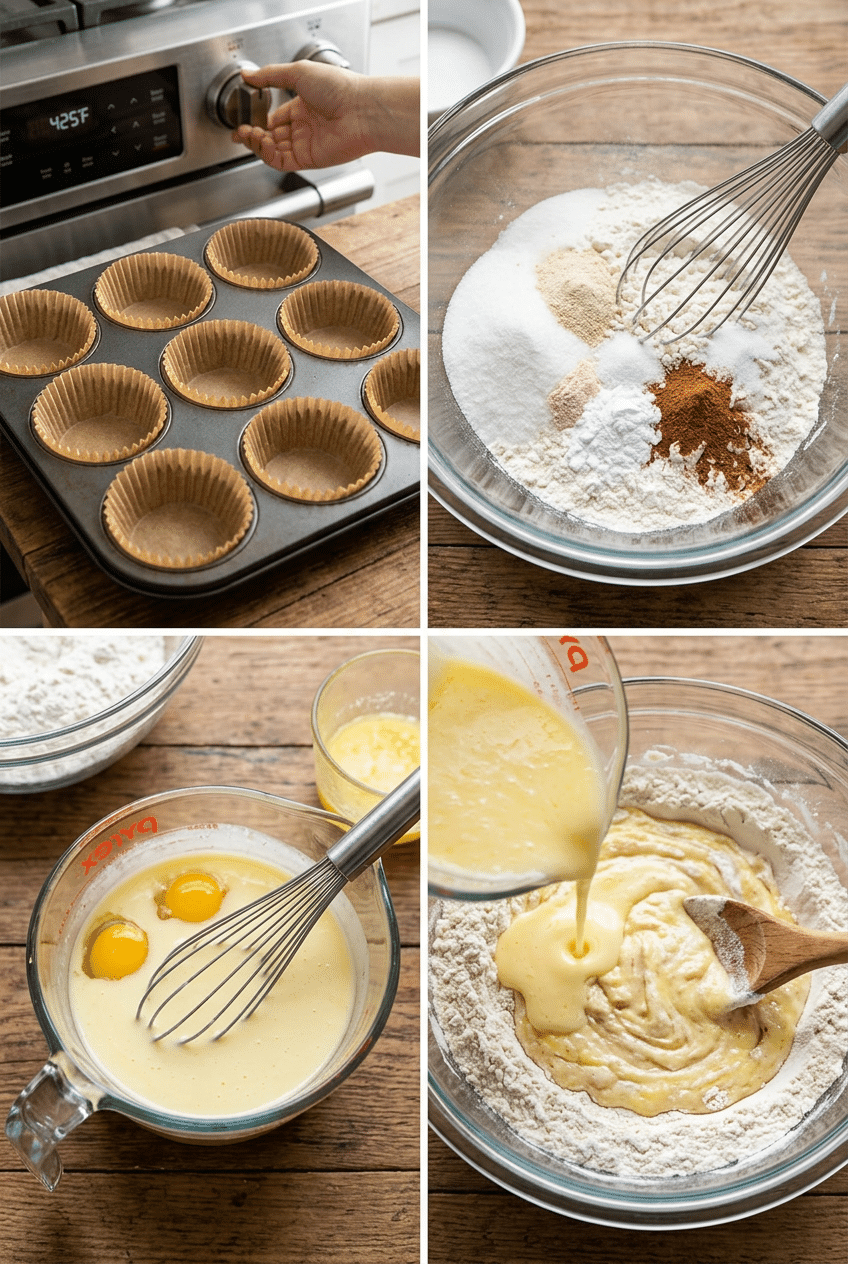
Step 6: Fill the Muffin Cups
Divide the batter evenly among the 12 muffin cups, filling each one almost to the very top — about 3/4 full or slightly more. This is another key to tall, domed tops: the batter needs to be generous enough to push up above the rim of the cup as it rises. If you underfill, you get flat, sad muffins. Press a few of the reserved blueberries onto the top of each muffin.
Mix the coarse sugar and cinnamon together in a small bowl, then sprinkle it generously over the tops of each muffin. Don’t be shy — this topping is the finishing touch that gives the muffins their crackly, bakery-style crust. Use turbinado sugar here if you can find it; the larger crystals stay crunchy even after baking.
👉 OXO Good Grips Large Cookie Scoop (3-Tablespoon) — A cookie scoop fills muffin cups perfectly and evenly in seconds — no messy dripping spoon.
Step 7: Bake, Then Reduce Heat
Bake at 425°F for exactly 5 minutes, then — without opening the oven door — reduce the temperature to 375°F (190°C) and continue baking for another 16 to 18 minutes. The initial high heat creates steam quickly, which pushes the batter up before the crust sets. Then the lower heat finishes the baking gently so the inside cooks through without the tops burning.
Your muffins are done when the tops are golden and a toothpick inserted into the center comes out clean or with just a crumb or two attached. The tops should spring back lightly when pressed. Let them cool in the pan for 5 minutes, then transfer to a wire rack — leaving them in the pan too long traps steam and softens that beautiful crust you just built.
Nutrition Information
- Per serving (1 muffin): 218 cal
- 8g fat
- 33g carbs
- 4g protein
- 1g fiber
- 16g sugar
- 195mg sodium
Pro Tips
Don’t thaw frozen blueberries: Frozen blueberries added straight from the freezer hold their shape better during mixing and baking. Thawed berries bleed into the batter and turn it an unappetizing grey-purple. If you’re worried about the cold berries dropping the batter temperature, just work quickly and get them in the oven fast.
Spoon and level your flour: Scooping flour directly from the bag packs it into the cup and you can end up with 20-30% more flour than the recipe intends. Always spoon flour into your measuring cup with a separate spoon, then sweep the top flat with a knife. This single habit is the difference between dense muffins and light, fluffy ones.
Rest the batter for 5 minutes: After you’ve filled the muffin cups, letting the batter rest for 5 minutes before going in the oven gives the baking powder time to start activating and the flour time to fully hydrate. You’ll notice an even higher dome as a result. This is a trick from professional bakeries that almost nobody talks about at home.
Room temperature matters: Cold eggs and cold buttermilk can cause the melted butter to re-solidify into tiny clumps when everything is mixed together. Those clumps bake into dense spots in the finished muffin. Pull your eggs and buttermilk out of the fridge at least 30 minutes before you start — or warm the buttermilk in the microwave for 20 seconds.
The toothpick test location: Insert your toothpick toward the edge of a muffin, not the very center. The center often has a burst blueberry which will look wet on your toothpick even when the muffin is fully cooked. Testing closer to the edge gives you a more accurate read on the doneness of the actual batter.
Delicious Variations
Lemon Blueberry Muffins
Add the zest of one large lemon to the wet ingredients and swap 2 tablespoons of the buttermilk for fresh lemon juice. The citrus cuts through the sweetness and makes the blueberry flavor pop in a way that’s hard to describe until you taste it. Finish with a simple lemon glaze — powdered sugar and lemon juice — drizzled over the cooled muffins.
Cream Cheese Stuffed Muffins
Mix 4 oz of softened cream cheese with 2 tablespoons of sugar and a splash of vanilla. Fill each muffin cup halfway with batter, add a small spoonful of the cream cheese mixture in the center, then top with more batter. The cream cheese melts into a molten, cheesecake-like core that makes these feel more like a dessert than a breakfast item.
Streusel Top Blueberry Muffins
Replace the sugar-cinnamon crust with a streusel made from 1/4 cup each of flour and cold butter (cubed), 1/4 cup brown sugar, and a pinch of cinnamon. Use your fingers to rub the butter into the flour and sugar until crumbly. Pile it generously on top of each muffin before baking. It bakes into a buttery, crumbly topping that’s absolutely irresistible.
Whole Wheat Blueberry Muffins
Swap half of the all-purpose flour for white whole wheat flour. White whole wheat has all the nutrition of regular whole wheat but a milder, less bitter flavor that plays nicely with blueberries. The texture will be slightly denser and heartier — in a good way — and the muffins will taste a bit more nutty and wholesome. Add an extra tablespoon of buttermilk to compensate for the thirstier whole wheat flour.
Blueberry Muffins with Almond Flour
For a lower-carb version, replace 1/2 cup of the all-purpose flour with almond flour. This adds a subtle nuttiness and keeps the muffins incredibly moist. You’ll need to reduce the oven temperature by 25°F and check a few minutes earlier since almond flour browns faster than all-purpose. The crumb will be slightly more dense but still light and tender.
Storage Instructions
Refrigerator
Store cooled muffins in an airtight container in the refrigerator for up to 5 days. To keep the tops from getting sticky, place a sheet of paper towel in the bottom of the container to absorb any excess moisture. Let refrigerated muffins come to room temperature for 15 minutes before eating, or warm them in the microwave for 15-20 seconds — they taste almost freshly baked.
Freezer
Blueberry muffins freeze beautifully for up to 3 months. Let them cool completely, then wrap each muffin individually in plastic wrap and place them in a zip-top freezer bag. To thaw, leave them on the counter for about an hour, or microwave a wrapped muffin for 30-45 seconds from frozen. The texture holds up remarkably well — you’d never know they were frozen.
Make-Ahead
You can mix the dry ingredients and wet ingredients separately the night before and store them covered in the fridge. Combine them in the morning, fold in the berries, and bake fresh. Alternatively, make the full batter and scoop it into the lined muffin tin, then cover tightly with plastic wrap and refrigerate overnight — bake directly from the fridge in the morning, adding 2-3 extra minutes to the bake time. Fresh muffins for breakfast with almost no morning effort.
For food safety guidelines, visit FDA Safe Food Handling Guidelines.
Frequently Asked Questions
Why did my blueberry muffins come out flat instead of domed?
Flat muffin tops usually come from one of three things: underfilling the cups, not starting at a high enough oven temperature, or overmixing the batter. Make sure you fill each cup at least 3/4 full — nearly to the top. Start baking at 425°F for the first 5 minutes; that blast of heat forces the batter up before the crust sets. And mix only until the flour disappears — no more.
Can I use frozen blueberries in this blueberry muffin recipe?
Absolutely, and they work great. The key is to add them directly from the freezer without thawing first. Thawed blueberries release too much liquid and can turn your entire batter purple or grey. Toss the frozen berries in a teaspoon of flour before folding them in — the coating helps them grip the batter and stay suspended instead of sinking to the bottom during baking.
What makes a blueberry muffin moist and tender?
Three things work together here: buttermilk, melted butter, and minimal mixing. Buttermilk’s acidity tenderizes the gluten strands in the flour, keeping the crumb soft. Butter adds flavor and richness that vegetable oil can’t match. And stopping the mixing the moment the flour disappears prevents you from developing too much gluten, which is what makes muffins tough and rubbery instead of light and pillowy.
How do I stop blueberries from sinking to the bottom?
Toss your blueberries in 1 teaspoon of all-purpose flour before folding them into the batter. The light coating creates just enough friction to keep them suspended throughout the muffin as it bakes. It also helps to use a thick batter — thin, runny batters don’t support the berries as well. This recipe’s batter is nice and thick, which helps a lot on its own even before the flour trick.
Can I make blueberry muffins without buttermilk?
Yes — the easiest substitute is to add 1 tablespoon of white vinegar or fresh lemon juice to 1 cup of regular whole milk. Stir it together and let it sit for 5 minutes until it curdles slightly. This homemade ‘quick buttermilk’ works almost as well as the real thing because it recreates the same acidity that tenderizes the crumb and activates the baking soda. Plain yogurt thinned with a little milk also works beautifully.
Can I make this blueberry muffin recipe into mini muffins?
Definitely. Use a mini muffin tin and fill each cup about 3/4 full. Bake at 375°F (skip the high-heat start for mini muffins since the smaller size bakes through faster) for 11 to 13 minutes, checking with a toothpick at the 11-minute mark. You’ll get about 30 to 36 mini muffins from this recipe. They’re perfect for lunchboxes, brunches, or just snacking straight off the rack.
More Recipes You Will Love
👉 Perfect Mini Bagel Sandwiches Recipe
👉 Perfect Homemade Uncrustables Recipe
👉 Perfect Ham And Cheese Wraps Recipe
These blueberry muffins are the kind of recipe you’ll come back to every single weekend once you get a feel for the method. The domed tops, the crackly sugar crust, the juicy berry pockets — it all comes together faster than you’d think. Make a batch this weekend, then drop a comment below and let me know if you went classic or tried one of the variations. Tag us in your photos — we love seeing your kitchens at work!