
📌 This post may contain affiliate links. If you purchase through these links, we may earn a small commission at no extra cost to you.
- Prep: 10 Minutes
- Cook: 8 Minutes
- Total: 18 Minutes
- Servings: 2 servings
A Quick Note Before You Start
Let your steaks come to room temperature for 30 minutes before cooking. This ensures even cooking throughout. Salt them right before cooking to prevent moisture loss.
This pan-seared steak recipe delivers restaurant-quality results in your own kitchen using simple techniques that guarantee a perfect crust and juicy interior every single time.
We’ll cover the exact temperature control, timing, and finishing touches that transform an ordinary steak into an extraordinary dining experience worthy of any steakhouse.
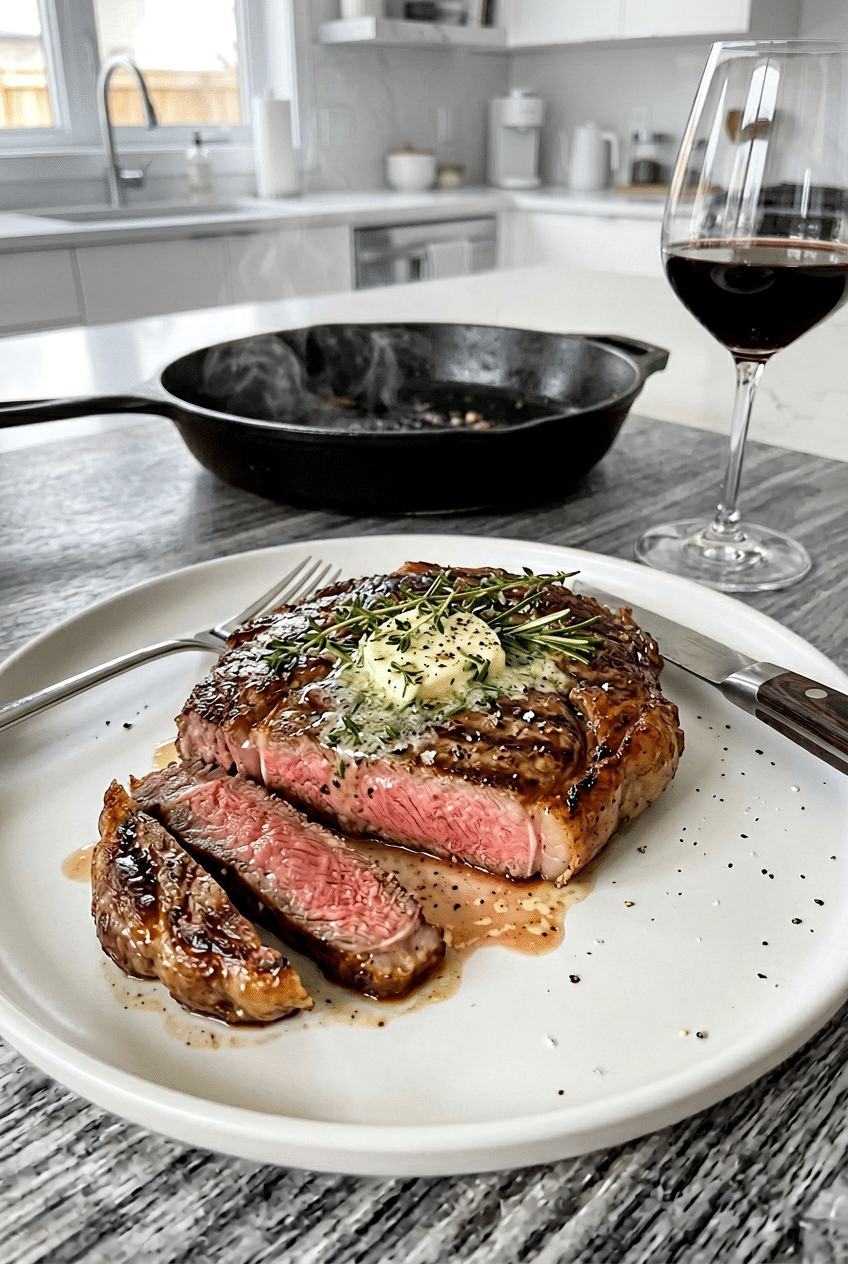
Ingredients for Perfect Pan-Seared Steak
For the Steaks
- 2 ribeye or New York strip steaks (1-1.5 inches thick) — provides the best marbling and flavor
- 2 teaspoons kosher salt — enhances natural flavors and creates better crust
- 1 teaspoon freshly ground black pepper — adds aromatic heat
- 2 tablespoons neutral oil (avocado or grapeseed) — high smoke point for searing
For the Finishing
- 3 tablespoons unsalted butter — creates rich basting sauce
- 3 fresh thyme sprigs — adds aromatic herbs
- 2 garlic cloves (smashed) — infuses butter with flavor
- Flaky sea salt for finishing — provides textural contrast
Optional Add-Ins
- 1 tablespoon fresh rosemary
- 2 tablespoons compound butter
- Cracked coriander seeds
How to Make Perfect Pan-Seared Steak Step by Step
Step 1: Prepare the Steaks
Remove steaks from refrigeration 30 minutes before cooking to bring them to room temperature. Pat each steak completely dry with paper towels, removing all surface moisture. This step is crucial because any remaining moisture will create steam instead of the beautiful sear we want.
Season both sides generously with kosher salt and freshly ground black pepper, pressing the seasoning into the meat. The salt will begin drawing out moisture immediately, which is exactly what we want for maximum flavor concentration.
Stop Guessing Steak Doneness! Cutting into your steak to check doneness releases all those precious juices you worked so hard to keep inside. The ThermoPro TP03A Digital Meat Thermometer gives you instant, accurate readings so you nail perfect medium-rare every single time.

- 【Professional Precision & Lightning Speed】With full readings in 1 second and +/-0.5°F Pro-Accuracy through industrial-le…
- 【Easy to Read】Large luminous digits and 180° auto-rotating ambidextrous backlit display make this kitchen thermometer ea…
- 【Easy to Use】Motion-Wake feature makes this digital instant thermometer ready to use at any time; 90-sec Auto-Off deacti…
Step 2: Heat the Pan
Place a cast iron skillet over medium-high heat and let it preheat for 3-4 minutes until it’s smoking hot. The pan should be hot enough that a drop of water immediately sizzles and evaporates. This intense heat is what creates that restaurant-quality crust we’re after.
Add the neutral oil to the hot pan and swirl to coat evenly. The oil should shimmer and move like water when the pan reaches the perfect temperature. Never add cold steaks to a cold pan – this guarantees uneven cooking and poor searing.
Cast iron skillet — Essential for even heat retention and that perfect restaurant-style sear.
Step 3: Sear the First Side
Gently lay the steaks away from you into the hot oil to avoid splattering. You should hear an immediate, aggressive sizzle – this sound tells you everything is working perfectly. Don’t move, flip, or touch the steaks for exactly 3-4 minutes.
The steaks will naturally release from the pan when they’re ready to flip. If you try to move them too early, they’ll stick and tear, ruining that perfect crust. Trust the process and let the heat do its magic.
No More Sticking Steaks! Regular pans cause steaks to stick and tear when you try to flip them, destroying your perfect sear. The [AFFILIATE-SEARCH: Lodge Cast Iron Skillet 12 Inch] heats evenly and naturally releases food when it’s perfectly seared.
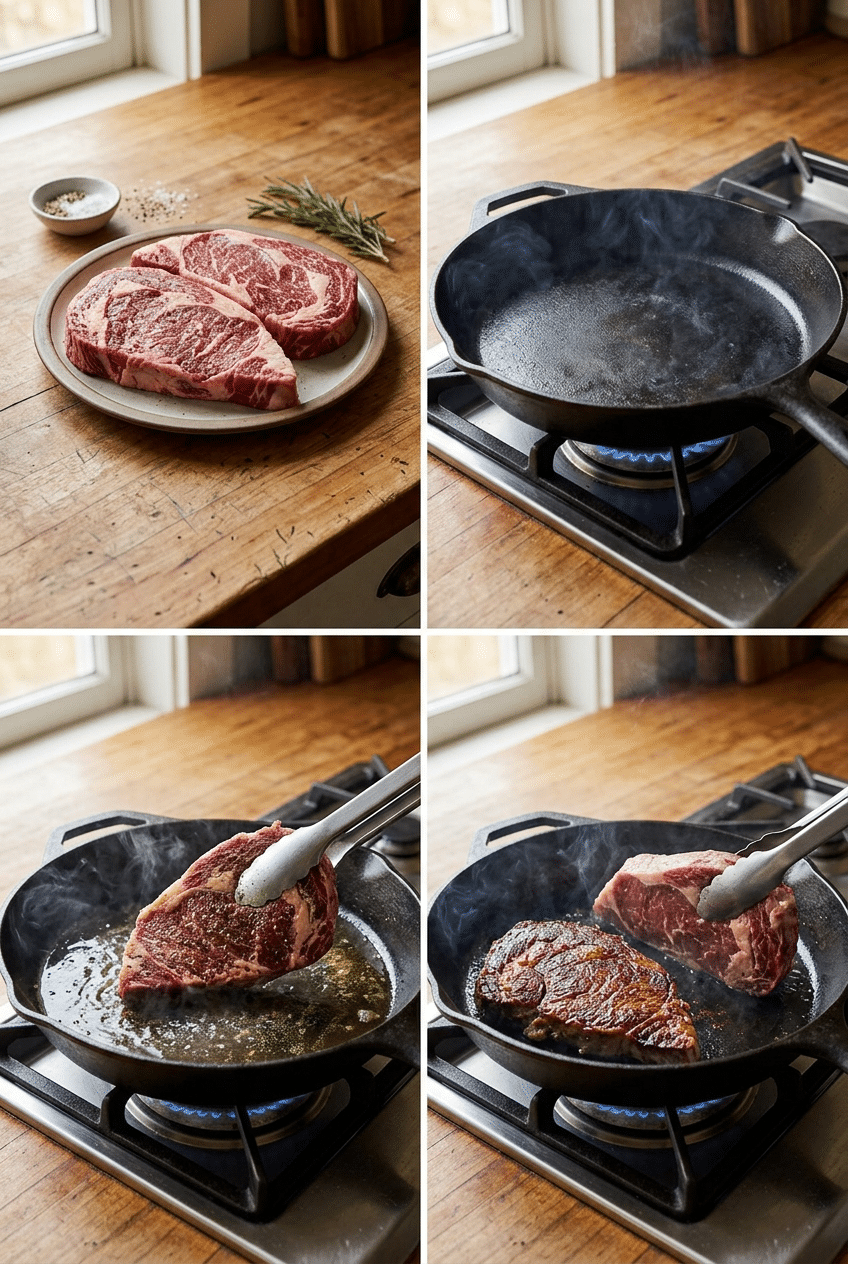
Step 4: Flip and Finish
Flip the steaks once using tongs – never a fork, which would puncture the meat and release juices. Cook for another 2-3 minutes for medium-rare, depending on thickness. The second side cooks faster because the steak is already heated through.
Add butter, smashed garlic, and thyme sprigs to the pan during the last minute of cooking. Tilt the pan and use a spoon to continuously baste the steaks with the foaming, aromatic butter. This basting technique adds incredible flavor and helps finish the cooking gently.
Step 5: Rest and Serve
Remove steaks from the pan when they reach your desired internal temperature: 125°F for medium-rare, 135°F for medium. Transfer to a cutting board and tent loosely with foil. Let them rest for 5-8 minutes – this crucial step allows juices to redistribute throughout the meat.
Slice against the grain if desired, or serve whole topped with a finishing sprinkle of flaky sea salt and a spoonful of the herb butter from the pan. The contrast between the crispy, salty crust and tender, juicy interior is absolutely perfect.
Nutrition Information
- Per serving: 520 cal
- 35g fat
- 0g carbs
- 48g protein
Pro Tips
Choose the right cut: Ribeye and New York strip work best for pan-searing because of their marbling and thickness. Aim for steaks that are 1-1.5 inches thick for optimal cooking control.
Temperature matters: Use a digital thermometer for perfect results every time. Medium-rare is 125°F, medium is 135°F, and medium-well is 145°F internal temperature.
Don’t overcrowd: Cook only 2 steaks at a time in a 12-inch pan. Overcrowding lowers the pan temperature and creates steam instead of searing.
Let it rest: Resting is not optional – it allows muscle fibers to relax and juices to redistribute, resulting in incredibly tender, juicy steaks.
Save the fond: Those brown bits stuck to the pan are pure flavor gold. Deglaze with wine or stock to make an instant pan sauce.
Delicious Variations
Garlic Herb Compound Butter
Mix softened butter with minced garlic, fresh herbs, lemon zest, and salt. Roll in plastic wrap and refrigerate. Slice rounds to top hot steaks for an elegant restaurant touch that melts into pure flavor.
Coffee-Crusted Steak
Combine ground coffee, brown sugar, paprika, and chili powder for a unique rub. The coffee adds deep, earthy notes while the sugar helps with caramelization. Perfect for adventurous steak lovers seeking something different.
Blue Cheese Topping
Crumble blue cheese over steaks during the last minute of cooking, letting it slightly melt. The sharp, creamy cheese creates an incredible contrast with the rich beef flavors that steakhouse enthusiasts absolutely love.
Storage Instructions
Refrigerator
Store cooked steaks in the refrigerator for up to 3 days wrapped tightly in plastic wrap or aluminum foil. The quality is best within 24 hours, though they remain safe longer. Reheat gently in a low oven (250°F) to avoid overcooking the already-perfect doneness you worked so hard to achieve.
Freezer
Cooked steaks can be frozen for up to 3 months when wrapped tightly in freezer paper or vacuum-sealed bags. However, the texture will suffer somewhat upon thawing. Raw steaks freeze much better – wrap individually and use within 6-12 months for best quality and flavor retention.
Make-Ahead
Season steaks up to 24 hours ahead and refrigerate uncovered on a wire rack. This dry-aging process concentrates flavors and improves texture significantly. Bring to room temperature before cooking. You can also prepare compound butter days ahead and refrigerate until needed.
For food safety guidelines, visit USDA Beef Safety Guidelines.
Frequently Asked Questions
How do I know when my pan-seared steak is done?
The most reliable method is using a digital meat thermometer inserted into the thickest part of the steak. For medium-rare, look for 125°F internal temperature. You can also use the finger test – medium-rare feels like the flesh between your thumb and forefinger when making an OK sign. Visual cues include a nicely browned crust and juices beginning to pool on the surface.
Why do my steaks always stick to the pan?
Sticking usually happens when the pan isn’t hot enough or the steaks are wet. Make sure your cast iron is smoking hot before adding oil, and always pat steaks completely dry with paper towels. Also, don’t try to move the steaks too early – they’ll naturally release when the sear is complete, typically after 3-4 minutes on the first side.
Can I use a regular pan instead of cast iron?
While cast iron is ideal for its heat retention and even heating, you can use a heavy-bottomed stainless steel pan. Avoid non-stick pans as they can’t handle the high heat needed for proper searing. The key is using a pan that can get screaming hot and maintain that temperature when you add the cold steaks.
Should I marinate my steaks before cooking?
High-quality steaks like ribeye and New York strip don’t need marinades – simple salt and pepper seasoning is perfect. Marinades work better for tougher cuts that need tenderizing. For premium steaks, focus on proper seasoning timing, cooking technique, and finishing touches like herb butter to enhance the natural beef flavors rather than masking them.
More Recipes You Will Love
👉 Perfect Homemade Burger Recipe (Best Ever)
👉 Perfect Ninja Creami Lemon Frozen Yogurt Recipe
👉 Perfect Cookie Butter Protein Ice Cream (Ninja Creami)
This pan-seared steak recipe transforms your kitchen into a high-end steakhouse with restaurant-quality results every single time. The key is high heat, proper timing, and that crucial resting period that makes all the difference. Try this technique tonight and experience what perfectly cooked steak should taste like – then come back and tell me how it turned out in the comments below!