
- Prep: 15 Minutes
- Cook: 15 Minutes
- Total: 30 Minutes
- Servings: 4 servings
A Quick Note Before You Start
The single biggest mistake people make with stir fry is overcrowding the pan — it steams the beef instead of searing it. Use the highest heat your stove has and cook in batches if needed. Trust the process and you’ll get that gorgeous caramelized crust every time.
Beef stir fry with rice is one of those weeknight meals that sounds impressive but comes together in under 30 minutes — tender strips of beef, crisp colorful vegetables, and a sticky savory sauce that coats every grain of rice perfectly.
The secret is all in the technique: high heat, dry beef, and a sauce you whisk together before you start cooking. Once everything is prepped, this dish moves fast — so having it all ready before the wok hits the burner is the real key to success.
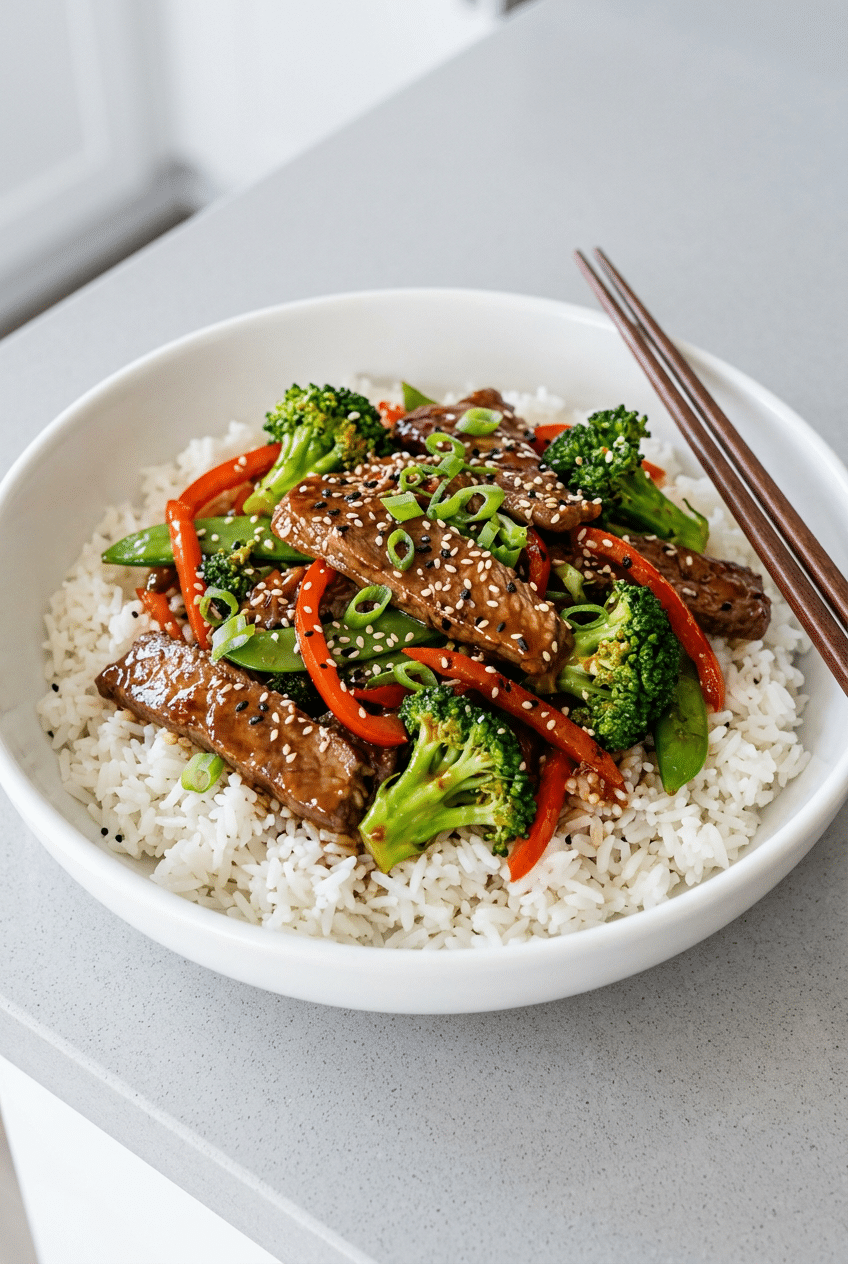
Ingredients for Beef Stir Fry with Rice
For the Beef
- 1 lb flank steak — sliced thin against the grain for maximum tenderness
- 1 tbsp cornstarch — the velveting secret that gives the beef that silky restaurant texture
- 1 tbsp soy sauce — for the marinade base
- 1 tsp sesame oil — adds depth right from the start
- 1/2 tsp baking soda — a small amount tenderizes the beef rapidly (Chinese restaurant trick)
For the Stir Fry Sauce
- 3 tbsp low-sodium soy sauce — controls salt without losing flavor
- 2 tbsp oyster sauce — adds umami richness that soy sauce alone can’t provide
- 1 tbsp hoisin sauce — brings a subtle sweetness and body to the sauce
- 1 tbsp rice vinegar — balances the saltiness with a gentle tang
- 1 tsp toasted sesame oil — stirred in at the end for fragrance
- 2 tsp cornstarch — thickens the sauce so it clings to everything
- 1 tsp brown sugar — rounds out the savory edges
- 1/4 cup beef broth or water — loosens the sauce to the right consistency
- 1 tsp chili garlic sauce — we use Huy Fong Chili Garlic Sauce — it adds a slow heat and fermented depth that’s totally addictive
For the Vegetables
- 2 cups broccoli florets — cut small so they cook fast without getting soggy
- 1 red bell pepper — julienned thin for quick cooking and sweetness
- 1 cup snap peas — adds crunch and freshness
- 3 cloves garlic — minced fine
- 1 tbsp fresh ginger — grated, not optional — this is what makes it taste like takeout
- 3 tbsp neutral oil — avocado or vegetable oil, something with a high smoke point
For Serving
- 3 cups cooked jasmine rice — day-old rice works best because it’s drier and absorbs the sauce beautifully
- 2 green onions — sliced thin on a diagonal for garnish
- 1 tbsp sesame seeds — toasted, for crunch and presentation
Optional Add-Ins
- 1 cup sliced mushrooms (shiitake or cremini)
- 1/2 cup baby corn
- 1 tsp five-spice powder in the marinade
- 1 tbsp Sambal Oelek for extra heat
- 1 cup shelled edamame
- Bok choy instead of broccoli
How to Make Beef Stir Fry with Rice Step by Step
Step 1: Slice and Velvet the Beef
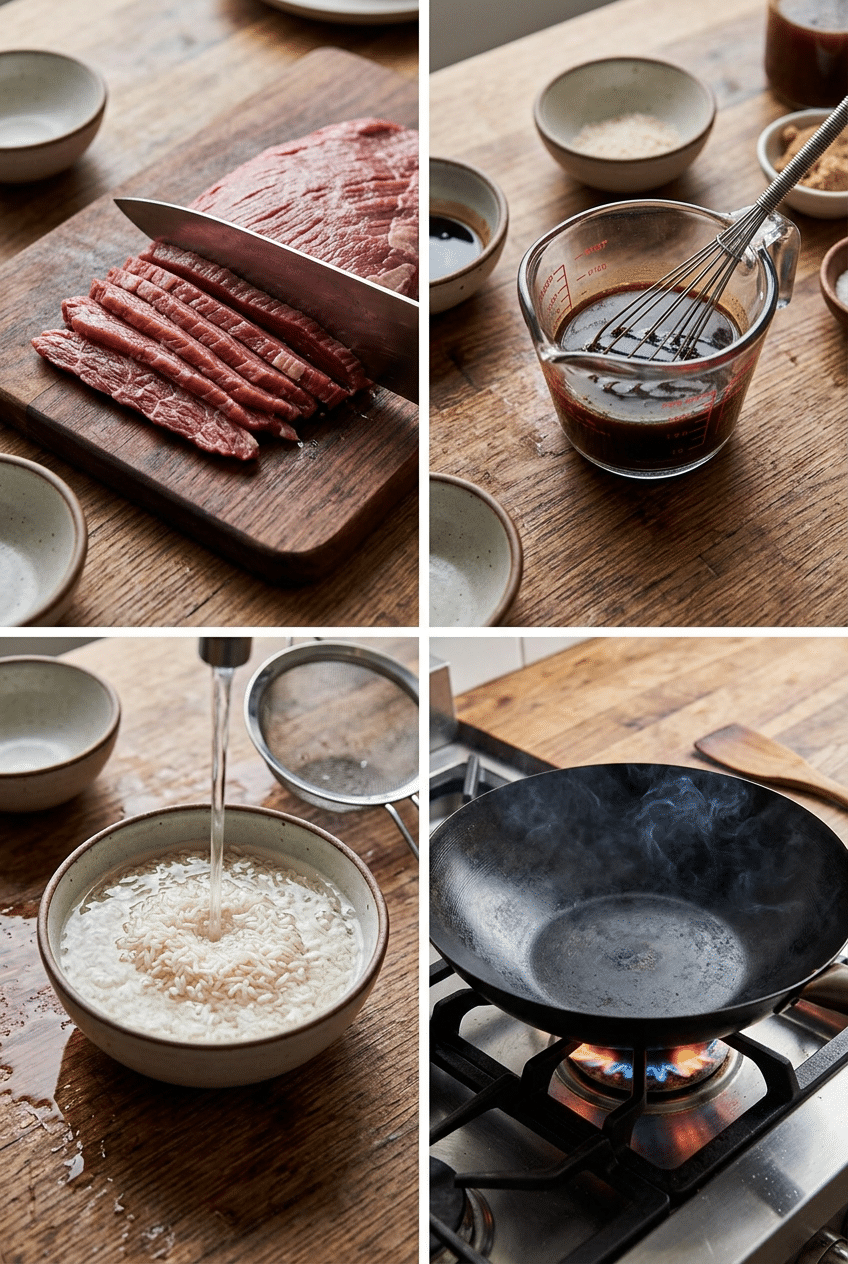
Start by slicing your flank steak as thin as you can — aim for about 1/4 inch — cutting against the grain so each slice is short and tender, not chewy. If the steak is slightly frozen (about 20 minutes in the freezer), it slices like butter. Pop those slices into a bowl and toss with the soy sauce, cornstarch, baking soda, and sesame oil until every piece is coated.
Let the beef sit for at least 10 minutes while you prep everything else. That baking soda is doing real work here — it raises the pH of the meat surface, which breaks down proteins faster and gives you that velvety, restaurant-style texture that’s hard to achieve at home without this trick. Don’t skip it, and don’t marinate longer than 30 minutes or the texture gets a little mushy.
Step 2: Mix Your Sauce First
In a small bowl or measuring cup, whisk together the soy sauce, oyster sauce, hoisin sauce, rice vinegar, sesame oil, brown sugar, cornstarch, and beef broth until the cornstarch fully dissolves. Stir in the Huy Fong Chili Garlic Sauce. Set it right next to the stove where you can grab it in one second.
This is the most important prep step in stir fry cooking — once that wok gets hot, everything moves in 60-second intervals and you will NOT have time to measure or stir sauces. Making it ahead means you’re just pouring and tossing, which is exactly how every great stir fry cook operates. Think of it like mise en place taken seriously.
👉 Huy Fong Chili Garlic Sauce — Adds fermented heat and depth you simply can’t replicate with fresh chili alone.
Step 3: Cook the Rice (If Not Already Done)
If you’re starting from scratch, rinse 1.5 cups of jasmine rice under cold water until it runs clear, then cook it in 2.25 cups of water — bring to a boil, drop to the lowest simmer, cover tightly, and let it go for 15 minutes. Pull it off the heat and let it steam with the lid on for another 5 minutes before fluffing. That rest time lets the grains fully absorb moisture without getting gummy.
Honestly though, the best move is to cook rice the night before and refrigerate it. Cold, day-old jasmine rice has lower moisture content and holds its shape better when served under a saucy stir fry — it absorbs the sauce without turning to mush. This is what every good Chinese restaurant does with fried rice, and the same principle applies here.
Step 4: Sear the Beef in Batches
Heat a large wok or wide skillet over the highest heat your stove produces. Add 2 tablespoons of neutral oil and let it heat until it shimmers and just starts to smoke. Add the beef in a single layer — do NOT stir right away. Let it sit for 45 to 60 seconds undisturbed so it gets a proper sear. Then flip and cook another 30 seconds. It should be browned on the outside but just barely cooked through.
Remove the beef to a plate and don’t crowd the pan — if you have more than one layer of beef, cook it in two separate batches. Crowding drops the pan temperature instantly, which means the beef steams in its own moisture instead of searing, and you lose that caramelized crust that gives the whole dish its depth of flavor. The 60 seconds of patience per batch makes a massive difference.
👉 Carbon Steel Wok with Flat Bottom — Reaches higher heat than any nonstick pan — essential for that seared crust on the beef.
Step 5: Stir Fry the Vegetables
Without wiping the pan, add the remaining tablespoon of oil over high heat. Toss in the broccoli and bell pepper first — these take the longest — and stir fry for 2 minutes, keeping them moving constantly. Add the snap peas, minced garlic, and grated ginger and cook for another minute. Everything should be bright and crisp, not soft.
You want the vegetables to have color and bite — slightly charred at the edges from the high heat. That char isn’t burning, it’s flavor. Ginger and garlic go in with the second wave because they cook fast and burn easily; adding them too early means bitter, acrid bits that ruin the whole dish. Keep them moving and they’ll bloom beautifully into the hot oil.
👉 OXO Good Grips Ginger Peeler — Gets every bit of ginger skin without wasting the flesh — costs almost nothing.
Step 6: Combine and Sauce Everything
Return the seared beef to the wok with the vegetables. Give your sauce one more quick stir (the cornstarch settles at the bottom), then pour it all over the beef and vegetables. Toss everything together over high heat for 60 to 90 seconds. The sauce will thicken quickly from the cornstarch and coat every single piece in that glossy, sticky glaze.
This final 90 seconds is where the dish comes together — the sauce reduces slightly, the garlic and ginger flavor infuses the protein, and the sesame oil in the sauce perfumes the whole wok. Serve immediately over warm jasmine rice and hit it with sliced green onions and toasted sesame seeds. Stir fry does not wait for anyone — plate it right away.
👉 Japanese Donburi Bowls (Set of 4) — Deep, wide bowls made for rice-based dishes — makes the presentation look restaurant-level.
Nutrition Information
- Per serving: 485 cal
- 14g fat
- 52g carbs
- 36g protein
Pro Tips
Freeze the steak for 20 minutes before slicing: Partially frozen beef firms up just enough that your knife glides through it in clean, even 1/4-inch strips. This single step makes the prep dramatically faster and ensures every piece cooks at the same rate — no thick chewy chunks mixed with thin overcooked ones.
Always preheat your wok until it smokes: Most home cooks don’t get the pan hot enough, which is the number one reason homemade stir fry tastes steamed instead of seared. Let your wok heat dry over high heat for at least 90 seconds before adding oil — you want it visibly smoking before anything goes in.
Use toasted sesame oil only as a finishing oil: Toasted sesame oil has a low smoke point and burns quickly, which turns its nutty flavor bitter. Add it to your sauce at the end or drizzle a few drops over the finished dish — never use it as your cooking fat. This is the difference between fragrant and acrid.
Blanch broccoli if you want it perfectly tender-crisp: If you prefer softer broccoli, blanch the florets in boiling salted water for 60 seconds, then shock in ice water before stir frying. This par-cooks them so the wok time just finishes them — no raw centers, no mushy texture, just that perfect bright green bite.
Rest the sauce-coated dish for 60 seconds before plating: After you pull everything off the heat, let the wok sit for one minute. The residual heat continues cooking the sauce, helping it cling to the beef instead of pooling at the bottom of the bowl. It’s a small move that makes a noticeable difference in presentation.
Delicious Variations
Spicy Szechuan Beef Stir Fry
Add 1 tablespoon of Szechuan peppercorns (lightly toasted and crushed) to the oil before adding your vegetables, and double the chili garlic sauce in your stir fry sauce. Finish with a drizzle of chili oil right before serving. The numbing heat of the peppercorns combined with the chili is the classic flavor profile of Szechuan-style beef — bold, tingly, and absolutely addictive.
Low-Carb Cauliflower Rice Version
Swap the jasmine rice for cauliflower rice — pulse a head of cauliflower in a food processor and cook it in a dry skillet over medium-high heat for 5 to 6 minutes until the moisture evaporates and it gets slightly golden. The cauliflower soaks up the stir fry sauce just like rice does and keeps the entire meal under 400 calories per serving without sacrificing any of the flavor.
Beef and Mushroom Stir Fry
Replace the snap peas with 2 cups of sliced shiitake mushrooms and add a splash of shaoxing rice wine to the sauce. Shiitake mushrooms are loaded with umami and act almost like a second protein in the dish — they absorb the sauce deeply and add a meaty, earthy complexity that makes the whole stir fry taste richer and more layered.
Honey Garlic Beef Stir Fry
Swap the hoisin and brown sugar for 2 tablespoons of honey and add an extra clove of garlic plus 1/2 teaspoon of garlic powder to the sauce. The honey caramelizes quickly in the hot wok and creates a glossy, slightly sticky glaze with a sweeter flavor profile — great if you’re cooking for kids or anyone who prefers a milder, less savory-heavy stir fry.
Storage Instructions
Refrigerator
Store leftover beef stir fry separately from the rice in an airtight container in the refrigerator for up to 4 days. Keeping them separate prevents the rice from absorbing all the sauce and turning into a soggy block overnight. To reheat, warm the stir fry in a skillet over medium heat with a splash of water or beef broth to loosen the sauce — it refreshes everything and brings it back to life. Microwave works in a pinch but the stovetop method gives you much better texture.
Freezer
The beef stir fry freezes well for up to 2 months — store it in a freezer-safe zip bag with the air pressed out. Vegetables with high water content like snap peas can get a little soft after freezing, so if you know you’re batch cooking for the freezer, undercook the vegetables slightly so they have more texture after reheating. Thaw overnight in the refrigerator and reheat on the stovetop over medium-high heat. Do not freeze cooked rice with the stir fry — cook fresh rice when you’re ready to serve.
Make-Ahead
This recipe is excellent for meal prep. Marinate the beef up to 24 hours in advance and keep it covered in the refrigerator — the longer velvet marinade actually improves the tenderness. You can also pre-chop all your vegetables, whisk the sauce, and store them separately in the fridge for up to 2 days so weeknight cooking is just a matter of firing up the wok. Cook a big batch of jasmine rice on Sunday and portion it into containers — you’ll have ready-to-go stir fry bowls all week.
For food safety guidelines, visit FDA Safe Food Handling Guidelines.
Frequently Asked Questions
What cut of beef is best for beef stir fry with rice?
Flank steak is the gold standard for stir fry because it’s lean, flavorful, and slices into clean strips against the grain. Skirt steak and sirloin are excellent alternatives. Avoid chuck or stew meat — they’re too tough and fatty for high-heat quick cooking. The velveting marinade with baking soda helps any of these cuts become noticeably more tender, so even a budget cut like top round comes out surprisingly good.
Why is my beef stir fry tough and chewy?
Two reasons: you either sliced WITH the grain instead of against it, or you overcrowded the pan. Slicing against the grain shortens the muscle fibers so every bite is tender. Overcrowding drops the wok temperature and causes the beef to steam in its moisture instead of searing — that steamed texture is what feels rubbery and tough. Always cook in batches over the highest heat your stove allows and you’ll get restaurant-quality results every time.
Can I use pre-made stir fry sauce instead of homemade?
Absolutely — and it’s a great shortcut on busy nights. Kikkoman Stir-Fry Sauce and Panda Express Mandarin Teriyaki Sauce are solid options available at most grocery stores. That said, the homemade sauce in this recipe takes under 2 minutes to whisk together, uses pantry staples, and lets you control the salt and heat level. Once you make it from scratch a couple of times, you’ll find it hard to go back to the bottled version.
What rice works best for beef stir fry?
Jasmine rice is the best pairing for beef stir fry — it’s fragrant, slightly sticky, and holds up beautifully under a saucy topping without turning mushy. Long-grain white rice is a fine substitute. The real trick is using day-old refrigerated rice, which has lower moisture and absorbs the sauce without getting gluey. If you only have fresh rice, spread it on a baking sheet for 10 minutes to let some surface moisture escape before serving.
Can I make beef stir fry with rice gluten-free?
Yes — swap regular soy sauce for tamari (which is brewed without wheat) and use certified gluten-free oyster sauce like the one made by Wok Mei. Hoisin sauce typically contains wheat, so look for a gluten-free version or replace it with an extra teaspoon of brown sugar plus a splash of rice vinegar. All other ingredients in this recipe are naturally gluten-free. The result is just as flavorful and the sauce has the same glossy consistency.
How do I keep vegetables crisp in a stir fry?
Three rules: high heat, short time, and dry vegetables. Pat your vegetables completely dry before they hit the wok — any surface moisture turns to steam and softens everything instantly. Cook over the highest heat setting on your stove and keep the vegetables moving constantly. For broccoli specifically, cut florets small so they cook through in 2 minutes without needing more time. Pull everything off heat while it still looks slightly underdone — residual heat finishes the job.
More Recipes You Will Love
👉 Perfect BBQ Baby Back Ribs Recipe (Fall-Off-Bone)
👉 Chicken Quesadilla Strips Recipe
👉 Perfect Ham And Cheese Wraps Recipe
This beef stir fry with rice is proof that you don’t need a takeout menu to get a bold, restaurant-quality dinner on the table fast. Master the velvet technique, respect the heat, and whisk your sauce before you start — and you’ll be making this on repeat. Give it a try this week and drop a comment below telling me how it turned out. Share it with someone who thinks weeknight cooking has to be boring.