
- Prep: 15 Minutes
- Cook: 45 Minutes
- Total: 60 Minutes
- Servings: 8-10 servings
A Quick Note Before You Start
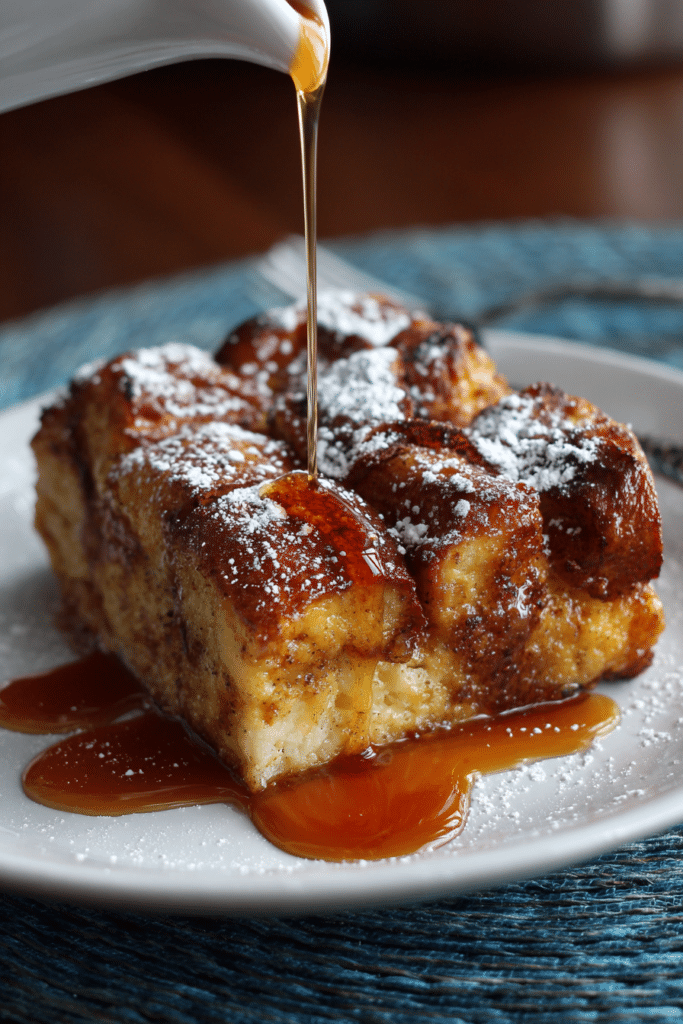
This french toast casserole overnight recipe transforms your morning routine. The bread soaks up all that custard overnight, creating the most incredible texture. No more rushing around making individual slices!
French toast casserole overnight is the ultimate breakfast game-changer that lets you prep everything the night before for a stress-free morning filled with golden, custardy perfection.
This make-ahead method creates deeper flavors and better texture than stovetop french toast because the bread absorbs every drop of that rich custard base overnight.
Ingredients for Perfect French Toast Casserole
For the Bread Base
- 1 loaf (16 oz) thick-cut brioche or challah bread — creates the perfect custardy texture
- 2 tablespoons butter — for greasing the pan
For the Custard Mixture
- 8 large eggs — provides structure and richness
- 2 cups whole milk — creates creamy custard base
- 1/2 cup heavy cream — adds extra richness
- 3/4 cup granulated sugar — sweetens and helps caramelization
- 2 teaspoons vanilla extract — essential flavor foundation
- 1 teaspoon ground cinnamon — warm spice that defines french toast
- 1/4 teaspoon salt — enhances all other flavors
- 1/4 teaspoon nutmeg — subtle warmth and complexity
For the Topping
- 1/2 cup brown sugar — creates caramelized top
- 1/2 cup all-purpose flour — thickens the crumb topping
- 1/2 cup cold butter, cubed — creates crispy texture
- 1 teaspoon cinnamon — extra spice layer
Optional Add-Ins
- 1/2 cup fresh blueberries
- 1/4 cup chopped pecans
- 2 tablespoons orange zest
- 1/4 cup cream cheese cubes
How to Make French Toast Casserole Overnight Step by Step
Step 1: Prep Your Bread
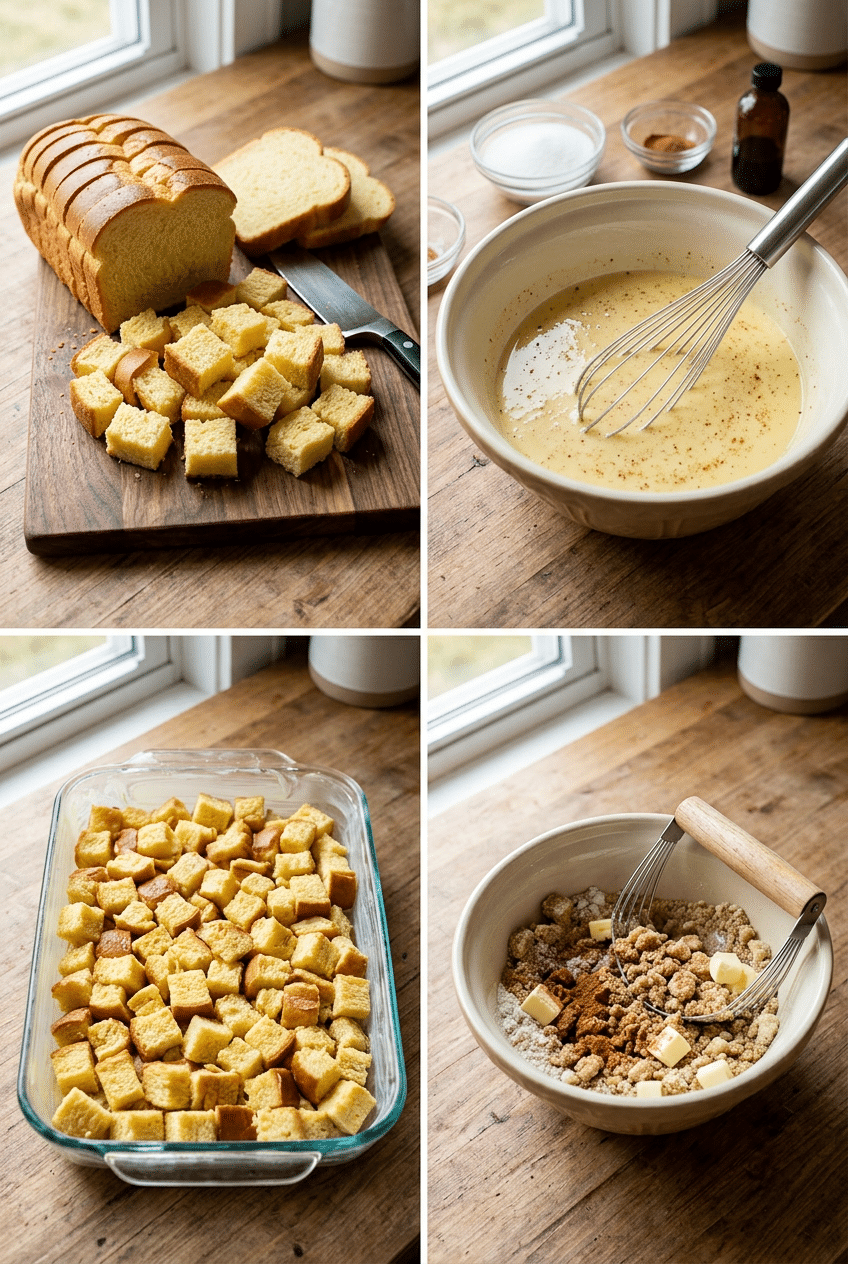
Cut your brioche or challah into 1-inch thick slices, then cube into bite-sized pieces. The thick cut is crucial because thin bread turns mushy overnight, while thick pieces hold their structure and create those perfect custardy pockets you’re craving.
Day-old bread actually works better than fresh because it’s slightly dried out and absorbs the custard more evenly. If your bread is fresh, leave the cubed pieces out for 30 minutes to let them firm up slightly.
Step 2: Create the Custard Base
Whisk together eggs, milk, heavy cream, sugar, vanilla, cinnamon, salt, and nutmeg in a large mixing bowl until completely smooth. The mixture should be pale yellow and frothy, with no visible egg streaks remaining.
That frothy texture means you’ve incorporated enough air to create a light, fluffy casserole rather than a dense, heavy one. Take your time with this step because proper mixing is what separates restaurant-quality results from soggy disappointment.
Step 3: Assemble the Casserole
Butter a 9×13 inch baking dish generously, then arrange your bread cubes in an even layer. Pour the custard mixture over the bread, making sure every piece gets coated by gently pressing down with a spatula.
The bread will float at first, but keep pressing gently until most pieces are submerged. This ensures even soaking and prevents dry spots that ruin the texture.
Step 4: Prepare the Crumb Topping
Mix brown sugar, flour, and cinnamon in a small bowl, then cut in cold butter cubes using a pastry cutter or fork until the mixture resembles coarse crumbs. The butter should be evenly distributed but still visible in small pieces.
Cold butter is essential here because it creates steam pockets during baking that result in a crispy, not soggy, topping. Room temperature butter would just melt and disappear into the flour.
Step 5: Overnight Soak Time
Cover the assembled casserole tightly with plastic wrap and refrigerate for at least 4 hours, but preferably overnight. This soaking time allows the bread to absorb every drop of that custard, creating the signature texture that makes this dish special.
The longer soak also allows the flavors to meld together beautifully. You can prepare this up to 24 hours ahead, making it perfect for holiday mornings or weekend brunches when you want to sleep in.
Thermapen ONE Digital Thermometer — No more guessing if your casserole is perfectly set – this reads in one second flat.

- 【8X Faster + 4X More Precise】: Upgraded with an industrial-leading professional thermocouple sensor, Themomonster meat t…
- 【Temperature Lock & Long Probe】: With a 4 inch long probe and the temperature lock, you can easily measure and read the …
- 【Auto Flip Large LCD Display】: Features an innovative auto flip large LCD screen with exceptional brightness, this food …
Step 6: Baking to Golden Perfection
Remove from refrigerator 30 minutes before baking to take the chill off, then preheat your oven to 350°F. Sprinkle the crumb topping evenly over the surface just before baking.
Bake for 45-50 minutes until the center is set and the top is golden brown with crispy edges. The casserole is done when a knife inserted in the center comes out with just a few moist crumbs clinging to it.
Using a digital probe thermometer takes the guesswork out of doneness – you want the internal temperature to reach 160°F. The Thermapen ONE reads in just one second and eliminates that anxious oven-door-opening that lets heat escape and creates uneven cooking.
Nutrition Information
- Per serving: 385 calories
- 18g fat
- 45g carbs
- 12g protein
Pro Tips
Use Day-Old Bread: Fresh bread gets too soggy overnight, while day-old bread has the perfect texture to absorb custard without falling apart completely.
Don’t Skip the Resting: Let the baked casserole rest for 10 minutes before serving so the custard sets properly and doesn’t run all over your plate.
Layer Your Flavors: Add cream cheese cubes between bread layers for pockets of tangy richness that balance the sweet custard perfectly.
Check the Jiggle: The center should have just a slight jiggle when you shake the pan – it will continue cooking from residual heat.
Make Mini Versions: Use individual ramekins for portion control and faster baking – reduce time to 25-30 minutes for personal-sized servings.
Delicious Variations
Berry Bliss Version
Fold 1 cup mixed fresh berries into the bread before adding custard. The berries add bursts of tartness that cut through the rich custard beautifully, plus gorgeous color throughout.
Chocolate Chip Indulgence
Sprinkle 3/4 cup mini chocolate chips between the bread layers for a dessert-like breakfast that still feels sophisticated rather than overly sweet.
Apple Cinnamon Classic
Layer thin apple slices with extra cinnamon between bread pieces. The apples soften overnight and create natural sweet pockets throughout the casserole.
Savory Breakfast Style
Reduce sugar to 2 tablespoons, add 1 cup cooked bacon bits and 1 cup shredded cheese for a breakfast casserole that works for dinner too.
Storage Instructions
Refrigerator
Cover leftover french toast casserole with plastic wrap and refrigerate for up to 4 days. The texture actually improves slightly as flavors continue melding. Reheat individual portions in the microwave for 30-45 seconds, or warm the whole dish covered in a 325°F oven for 15-20 minutes.
Freezer
Wrap cooled casserole tightly in plastic wrap, then aluminum foil, and freeze for up to 3 months. Thaw overnight in the refrigerator before reheating. The texture will be slightly different but still delicious – expect it to be a bit more dense than fresh.
Make-Ahead
Assemble the entire casserole up to 24 hours ahead, but wait to add the crumb topping until just before baking. You can also pre-make the crumb topping and store it separately in the fridge, then sprinkle it on before baking for maximum crispiness.
For food safety guidelines, visit USDA Food Safety Guidelines.
Frequently Asked Questions
Can I use regular sandwich bread for french toast casserole overnight?
While you can use regular bread, brioche or challah creates much better results because they’re enriched with eggs and butter, making them sturdier and more flavorful. Regular bread tends to get too soggy and lose its texture during the overnight soaking process.
Why is my overnight french toast casserole soggy in the middle?
Soggy centers usually happen from too much liquid or not enough baking time. Make sure your custard ratio is correct, press the bread down to eliminate air pockets, and bake until the internal temperature reaches 160°F. Also, let it rest 10 minutes before cutting to allow the custard to set.
How do I know when french toast casserole overnight is fully cooked?
The casserole is done when the center is set with just a slight jiggle, the edges are golden brown, and a knife inserted in the center comes out mostly clean. The internal temperature should reach 160°F for food safety and perfect texture.
Can I make french toast casserole overnight without eggs?
Eggs are crucial for the custard structure, but you can substitute with 1/2 cup aquafaba (chickpea liquid) plus 2 tablespoons cornstarch per egg. The texture won’t be identical, but it will still be delicious and hold together well after the overnight soak.
More Recipes You Will Love
👉 Perfect Homemade Churros Recipe (Crispy Outside)
👉 Perfect Rotisserie Chicken Casserole Recipe
👉 Perfect Strawberry Cold Foam Recipe (Starbucks Style)
This french toast casserole overnight recipe transforms your morning routine while delivering restaurant-quality results every single time. The make-ahead convenience means you can enjoy a luxurious breakfast without the early morning stress. Try this recipe for your next family gathering or weekend brunch, and don’t forget to share your results in the comments below – I love hearing how this recipe becomes part of your breakfast traditions!