
- Prep: 15 Minutes
- Cook: 45 Minutes
- Total: 60 Minutes
- Servings: 6 servings
A Quick Note Before You Start
This clam chowder recipe creates the thick, creamy texture you crave without being gloppy. The secret is building layers of flavor from bacon fat to clam juice.
Clam chowder recipe perfection starts with understanding why restaurant versions taste so rich and satisfying—it’s all about the base.
This technique builds flavor from bacon drippings, then adds clam juice gradually to create that signature velvety texture you remember.
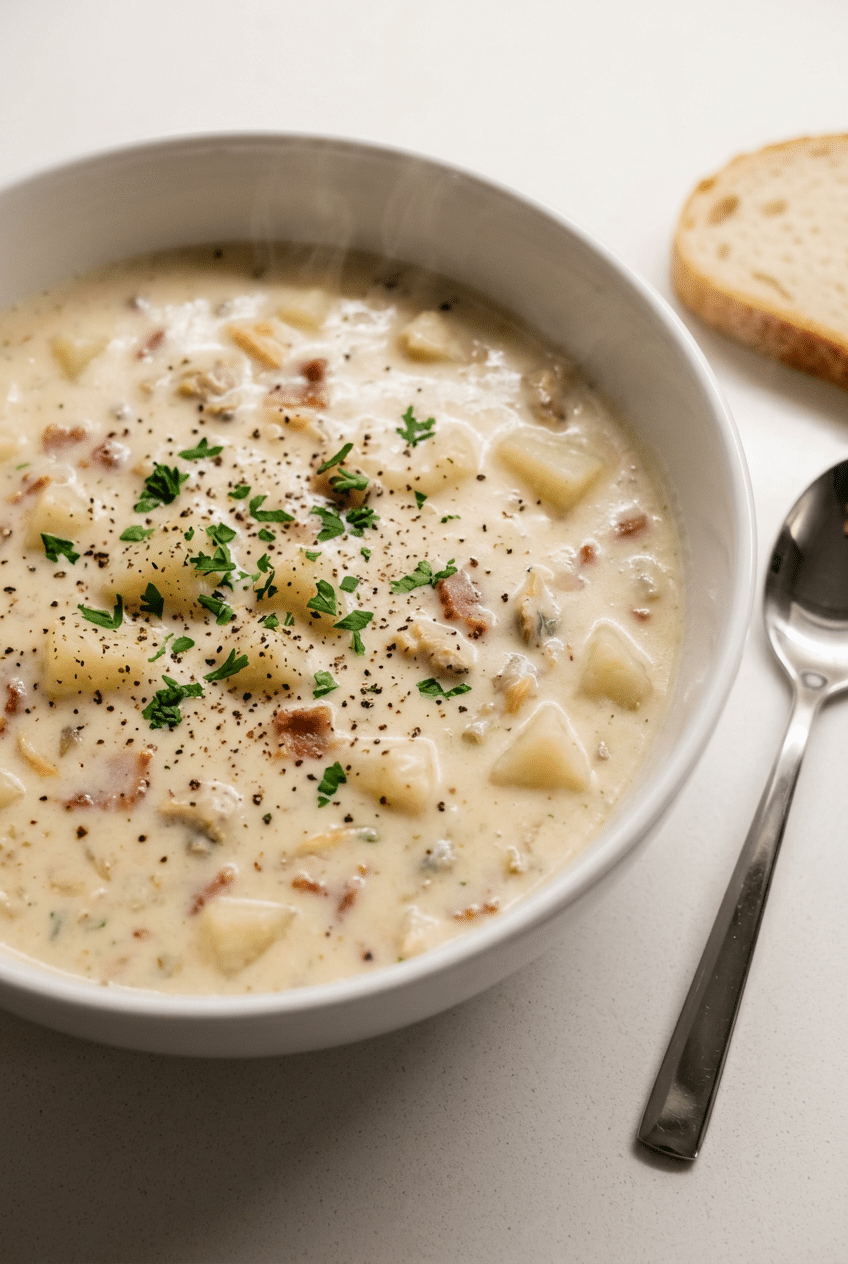
Ingredients for Perfect New England Clam Chowder
For the Base
- 6 slices thick-cut bacon — diced, provides smoky foundation
- 3 tablespoons unsalted butter — adds richness to vegetables
- 1 large yellow onion — diced, creates sweet aromatic base
- 3 celery stalks — diced, adds fresh crunch and flavor
- 3 cloves garlic — minced, enhances overall depth
- 1/4 cup all-purpose flour — thickens the chowder perfectly
For the Liquid
- 3 cups chicken broth — use low-sodium for better control
- 2 (8 oz) bottles clam juice — essential for authentic clam flavor
- 1 bay leaf — adds subtle earthy notes
- 1 teaspoon fresh thyme — or 1/2 teaspoon dried
- 1 cup half-and-half — creates creamy texture
For the Chowder
- 1.5 pounds Yukon Gold potatoes — peeled and diced, hold shape well
- 3 (6.5 oz) cans chopped clams — drained, juice reserved separately
- 1 teaspoon kosher salt — adjust to taste
- 1/2 teaspoon black pepper — freshly ground preferred
- 1/4 teaspoon hot sauce — enhances flavors without heat
Optional Add-Ins
- 2 tablespoons fresh parsley for garnish
- Oyster crackers for serving
- 1 teaspoon Worcestershire sauce for depth
How to Make Perfect Clam Chowder Recipe Step by Step
Step 1: Cook the Bacon Foundation
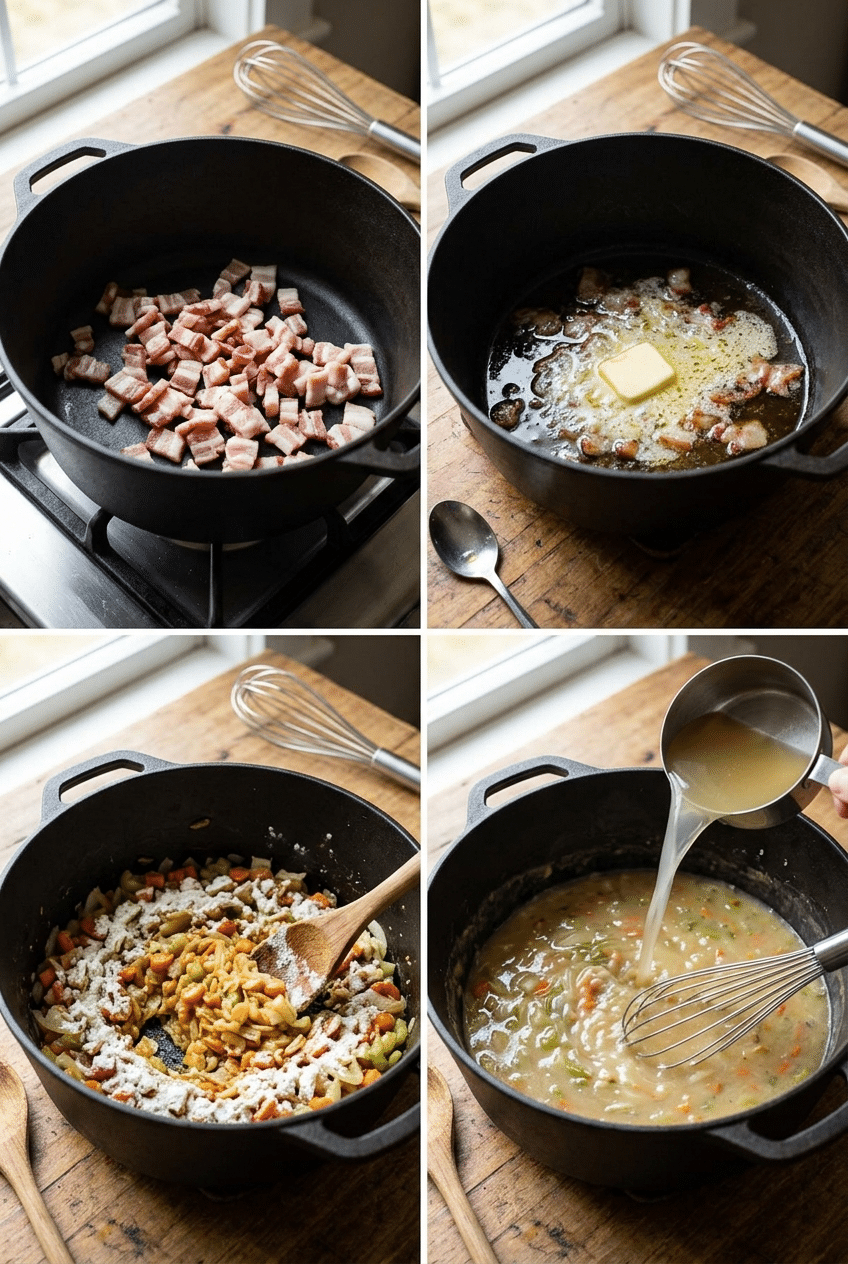
Place diced bacon in a large Dutch oven or heavy-bottomed pot over medium heat. Cook slowly, stirring occasionally, until the bacon turns golden brown and crispy, about 8-10 minutes. The key is rendering out as much fat as possible without burning the bacon—this creates the flavor foundation your entire chowder builds upon.
Remove the crispy bacon with a slotted spoon and transfer to paper towels to drain. Reserve 2 tablespoons of the bacon drippings in the pot, discarding the rest. This measured amount gives you rich flavor without making the chowder greasy.
Trying to eyeball bacon drippings leads to greasy, heavy chowder that coats your mouth unpleasantly. A good fat separator makes this step foolproof—pour the drippings through the spout, and the fat stays behind while the flavorful liquid flows out. The OXO Good Grips Fat Separator has measurement marks and a strainer lid, so you get exactly 2 tablespoons of clean drippings every time.
👉 OXO Good Grips Fat Separator — Essential for controlling bacon fat Check price on Amazon →
Step 2: Build the Aromatic Base
Add butter to the reserved bacon drippings and melt over medium heat. Add diced onion and celery, cooking while stirring occasionally until the vegetables soften and become translucent, about 6-8 minutes. The vegetables should smell sweet and aromatic, not browned or caramelized.
Stir in minced garlic and thyme, cooking just until fragrant, about 1 minute. Don’t let the garlic brown or it will turn bitter and overpower the delicate clam flavors. The mixture should smell incredible at this point—like the foundation of every great soup you’ve ever had.
Step 3: Create the Roux
Sprinkle flour evenly over the vegetable mixture and stir constantly for 2 minutes. This cooks out the raw flour taste and creates a light roux that will thicken your chowder without lumps. The mixture should smell nutty and look slightly golden, not white or pasty.
Don’t rush this step—undercooked flour tastes starchy and unpleasant, while overcooked flour loses its thickening power and turns bitter. You want that perfect sweet spot where the flour smells toasted but hasn’t darkened significantly.
Step 4: Add Liquids Gradually
Slowly pour in chicken broth while whisking continuously to prevent lumps from forming. Add the broth in three additions, whisking until smooth after each addition. Follow with the clam juice, bay leaf, and reserved juice from the canned clams, whisking until completely incorporated.
This gradual addition prevents the flour from clumping and creates a silky base. If you dump all the liquid in at once, you’ll get lumpy chowder that’s impossible to fix. The mixture should be smooth and slightly thickened at this point.
Whisking by hand gets exhausting fast, and weak whisks bend when you need them most. The Cuisinart 10-inch Stainless Steel Whisk has perfectly spaced wires that cut through thick mixtures effortlessly. The comfortable handle prevents hand fatigue, and the heavy-duty construction means it won’t bend when incorporating thick roux into cold liquid—exactly what separates restaurant-smooth chowder from lumpy homemade disasters.
👉 Cuisinart 10-inch Stainless Steel Whisk — Prevents lumpy chowder Check price on Amazon →
Step 5: Simmer and Build
Bring the mixture to a gentle boil, then reduce heat to maintain a steady simmer. Cook for 15 minutes, stirring occasionally, allowing the flavors to marry and the base to thicken slightly. This simmering time is crucial for developing that rich, concentrated flavor that separates great chowder from merely good chowder.
The mixture should be bubbling gently around the edges, not rolling boil that might cause the base to break. Taste and adjust seasoning—it should be well-seasoned at this stage because the potatoes will absorb much of the flavor.
Step 6: Add Potatoes Perfectly
Add diced potatoes to the simmering base and cook until fork-tender, about 20-25 minutes. Don’t rush this step by turning up the heat—potatoes need gentle, steady cooking to become creamy inside while holding their shape. Test doneness by piercing with a fork; they should offer no resistance.
Yukon Gold potatoes are ideal because they have enough starch to help thicken the chowder naturally while maintaining their shape. Russets fall apart too easily, while red potatoes stay too firm and waxy for perfect chowder texture.
Step 7: Finish with Cream
Reduce heat to low and slowly stir in half-and-half. Add drained clams, reserved cooked bacon, salt, pepper, and hot sauce. Simmer gently for 5 minutes just to heat the clams through—don’t boil or the cream may curdle and the clams will become rubbery.
The hot sauce enhances all the flavors without adding heat you can detect. Remove the bay leaf and taste for final seasoning adjustments. The chowder should coat the back of a spoon but still pour easily.
Maintaining low temperature while stirring is nearly impossible with standard wooden spoons that don’t reach the pot corners. The Le Creuset Revolution Spoon has an angled head that scrapes every inch of your pot bottom, preventing scorching while you add the cream. The heat-resistant silicone won’t melt or scratch your Dutch oven, and the long handle keeps your hands away from steam—essential for the final delicate stage where perfect chowder can turn into broken soup in seconds.
👉 Le Creuset Revolution Spoon — Prevents scorching during final stage

- [Large Spoon Rest] This ceramic spoon holder measures 6.1 x 5 inches, matches most common cooking utensils of the usual …
- [Unique kiln-fired artistry] Each Cormomu spoon rest uses a reactive glaze that, combined with high-temperature firing, …
- [Easy Cleaning] This countertop spoon holder is made of nonstick ceramic with a glossy coating that makes it easy to cle…
Nutrition Information
- Per serving: 425 calories
- 18g fat
- 42g carbs
- 22g protein
- 3g fiber
- 890mg sodium
Pro Tips
Clam Juice Quality Matters: Bar Harbor and Snow’s are the gold standard brands. Cheap clam juice tastes metallic and thin—invest in quality for restaurant-worthy results.
Test Potato Doneness: Pierce potatoes with a fork; they should offer zero resistance. Undercooked potatoes stay hard and chalky even after cooling.
Temperature Control is Critical: Never let the chowder boil once you add the cream. It will curdle instantly and there’s no fixing it.
Fresh vs Canned Clams: If using fresh, you need about 7 pounds of littleneck clams to yield 1.5 cups of meat. Steam until just opened, then chop.
Thickness Adjustment: Too thin? Simmer uncovered to reduce. Too thick? Add warm half-and-half gradually until perfect consistency.
Make-Ahead Strategy: Chowder improves overnight as flavors meld. Reheat very gently over low heat, adding liquid if needed.
Delicious Variations
Manhattan Style
Replace half-and-half with 1 (14.5 oz) can diced tomatoes and 1 cup tomato sauce. Add 1/2 cup diced bell pepper with the onions for authentic red chowder that’s lighter but equally satisfying.
Rhode Island Clear
Omit flour and cream entirely. Use 6 cups total liquid (chicken broth and clam juice). Add 2 tablespoons white wine vinegar at the end for the traditional clear, brothy consistency.
Long Island Mixed
Combine both styles by using 1/2 cup half-and-half and 1 cup diced tomatoes. This pink chowder offers the best of both worlds with moderate richness and subtle tomato flavor.
Storage Instructions
Refrigerator
Store covered in refrigerator for up to 4 days. The flavors actually improve overnight as they meld together. Reheat gently over low heat, stirring frequently to prevent scorching. Add splash of half-and-half if needed to restore consistency. Never microwave—it breaks the cream and ruins texture.
Freezer
Not recommended for freezing. Cream-based soups separate and turn grainy when thawed, and potatoes become mushy and unpleasant. The texture changes dramatically and there’s no way to restore the original creamy consistency once frozen and thawed.
Make-Ahead
Prepare through step 5 (before adding cream and clams) up to 2 days ahead. Store base covered in refrigerator. When ready to serve, reheat base gently, then proceed with adding cream and clams. This actually improves flavor development while maintaining perfect texture.
For food safety guidelines, visit FDA Seafood Safety Guidelines.
Frequently Asked Questions
Can I use fresh clams in this clam chowder recipe?
Absolutely! You’ll need about 7 pounds of littleneck or cherrystone clams to yield 1.5 cups of chopped meat. Steam them until just opened, reserve the cooking liquid to use in place of bottled clam juice, and chop the meat. Add fresh clams at the very end to prevent overcooking and maintain tender texture.
Why is my clam chowder recipe turning out lumpy?
Lumps form when flour isn’t properly incorporated into the roux or when liquid is added too quickly. Cook the flour with vegetables for 2 minutes, then add liquid gradually while whisking continuously. If lumps do form, strain the chowder through fine mesh or use an immersion blender briefly to smooth the base.
How thick should my clam chowder recipe be?
Perfect chowder should coat the back of a spoon but still pour easily from a ladle. It should be thick enough to support the clams and vegetables without being gloppy. If too thin, simmer uncovered to reduce. If too thick, add warm half-and-half gradually until desired consistency is reached.
What’s the best potato for clam chowder recipe success?
Yukon Gold potatoes are ideal because they have moderate starch content that helps thicken the chowder while maintaining shape. Red potatoes work but stay firmer, while Russets can fall apart and make the chowder too thick. Always dice uniformly for even cooking throughout your chowder.
More Recipes You Will Love
👉 Perfect Mediterranean Lemon Chicken Soup Recipe
👉 Slow Cooker Broccoli Cheese Soup Best Recipe – Panera’s Got Nothing on This
👉 Crockpot Chicken Gnocchi Soup Recipe – Olive Garden Copycat Made Better
This clam chowder recipe delivers restaurant-quality results that will have your family begging for seconds. The key is building flavor layers from bacon fat to clam juice, then finishing gently to maintain that perfect creamy texture. Try it this weekend and let me know in the comments how it turned out—I love hearing about your cooking successes!